LATAM
A320
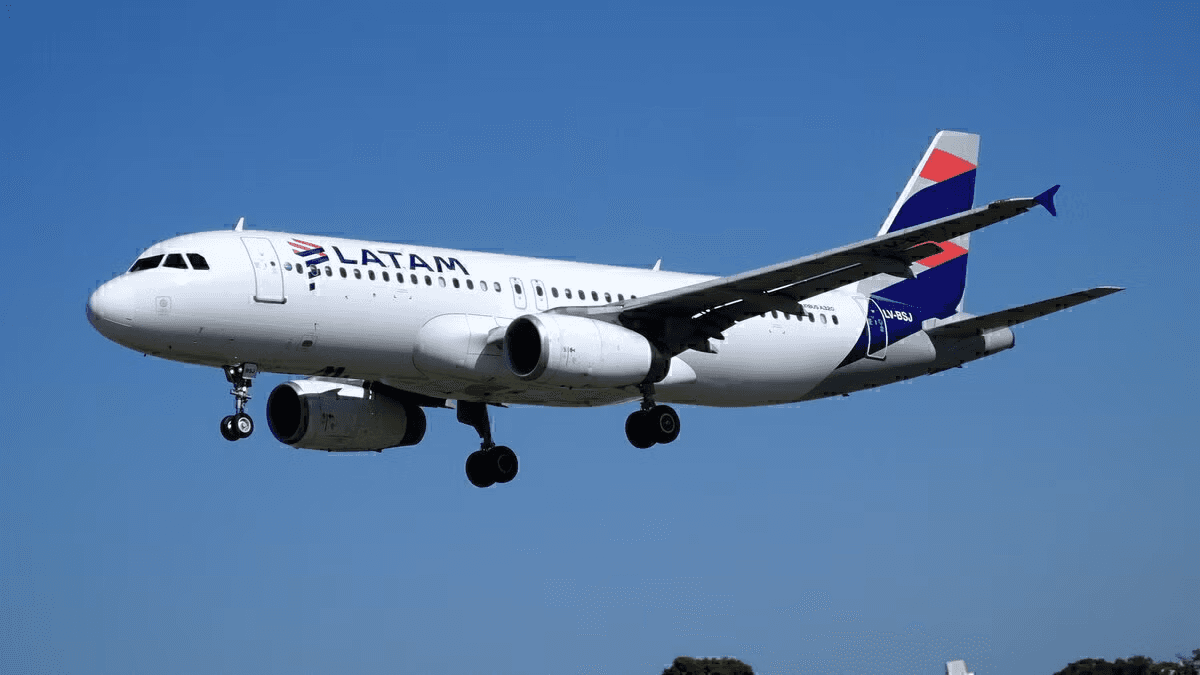
LATAM A320 Seat Guide (2026) | Cabin.coach
TL;DR
LATAM A320 carries roughly 150 passengers: ~16 in Business (2-2 layout), ~134 in Economy (2-3 layout). Best Business seat: 1A or 1B for direct aisle access and extra legroom at the front. Best Economy: 11A or 11C (exit row, extra pitch). Worst seat: 30E (last row middle seat, galley proximity, no recline, last to be served). Surprising insight: window seats in rows 12–20 offer the acoustic sweet spot away from the cabin galley noise but still feel spacious relative to mid-cabin rows.
The LATAM A320 is a narrowbody workhorse for regional and short-haul South American routes, configured with a 2-3 cabin layout split between Business and Economy. Row 10E is the middle seat trap in Economy—avoid it unless you enjoy being wedged between two passengers on a full flight. The A320's defining characteristic is its tight cabin: even Business Class lacks the extra legroom you'd get on a widebody, making seat selection more critical than on larger aircraft.
Quick specs
Cabin | Layout | Seats | Pitch | Width | IFE |
|---|---|---|---|---|---|
Business | 2-2 | 16 | 32–36 in | 17.2 in | Personal 7–9 in seatback screen |
Economy | 2-3 | 134 | 31 in standard / 32 in exit rows | 17.2 in | Shared or none on short routes |
Business Class
Business occupies rows 1–8 in a 2-2 abreast layout with direct aisle access from every seat. Odd seats (A, B) are starboard (right), even seats (C, D) are port (left). There are no privacy doors, and the cabin is separated from Economy by a curtain divider. Rows 1–2 offer the best legroom and quietness; rows 7–8 sit closer to the galley and first lavatory. On short regional routes (under 4 hours), Business Class includes complimentary drinks and a snack service; on longer routes (4+ hours), hot meals are served. Recline is typically 6–8 inches, which is standard for narrowbody Business.
Economy Class
Economy occupies rows 9–30 in a 2-3 layout: A and C are window seats, B is the left aisle seat, D and E are middle and right aisle seats respectively. Exit rows are at rows 11 (overwing, 32 in pitch) and rows 26–27 (rear exit, 32 in pitch). These rows are the primary LATAM+ premium seats. Row 10E, 20E, 28E, 29E, and 30E are the middle seat horror tier—avoid unless necessary. Rows 9–10 (bulkhead / first Economy row) have no recline due to galley and bulkhead clearance. Rows 29–30 are the last two rows, meaning reduced recline, galley proximity, and last-to-be-served status on longer flights. The acoustic sweet spot is rows 12–20, away from both the forward galley and rear lavatories.
Best seats
Seat | Cabin | Why |
|---|---|---|
1A | Business | Row 1 starboard window: first seat on aircraft, maximum legroom, quietest cabin location, direct aisle access |
1B | Business | Row 1 port window: matching benefits to 1A, opposite side of cabin |
11A | Economy | Exit row window with 32 in pitch; extra legroom for long legs, no seat in front, window privacy |
11C | Economy | Exit row window with 32 in pitch on right side; paired legroom advantage, aisle-proximate for easy lavatory access |
15B | Economy | Acoustic sweet spot: center aisle seat midway through Economy, equidistant from galley and lavatory noise, natural light from windows across cabin |
Seats to avoid
Seat | Cabin | Why |
|---|---|---|
10E | Economy | Middle seat directly aft of bulkhead, galley turbulence and service cart bumping, no recline on row 10, wedged between two passengers |
26D | Economy | Rear exit row middle seat: pinched between exit door frame and engine noise, limited recline, awkward egress position |
30E | Economy | Last row, middle seat: absolute last to be served, galley and lavatory queues immediately forward, no recline, engine noise peak |
9A | Economy | Bulkhead window with 28 in under-seat storage and no recline; galley activity; footwell turbulence from cart movement |
⚡ Power & Connectivity Reality Check
LATAM's A320 fleet offers inconsistent power infrastructure depending on aircraft age and recent retrofit status. Newer A320s in the fleet (delivered 2015 onwards) have USB power ports at most Economy seats, but availability is patchy—typically at every other row or scattered throughout the cabin rather than universal. AC outlets are extremely rare on the standard A320 and found only in select bulkhead or premium seating areas. Older A320s (pre-2015) have minimal to no USB provision, making a portable battery pack essential for any flight over 3 hours.
In-flight entertainment on LATAM A320 flights uses seatback screens on most aircraft, though some newer deliveries are transitioning to app-based streaming via LATAM's mobile system. Seatback screens offer better reliability on short-haul routes where WiFi connectivity is inconsistent. The WiFi provider is typically Viasat or Intelsat depending on aircraft retrofit year. Real-world speeds on domestic routes (e.g., São Paulo to Rio or Santiago to Valparaíso) rarely exceed 3–5 Mbps download, adequate for messaging but insufficient for streaming video. Bluetooth audio pairing is available on newer A320s with updated IFE systems, but older aircraft may not support wireless connectivity to personal devices. Bring a 10,000 mAh portable battery pack regardless of seatback screens—USB availability remains unpredictable enough that relying on it alone for a 5+ hour flight is risky.
🧳 Overhead Bin Strategy
LATAM's A320 fleet uses standard-size overhead bins (14 cubic feet per bin) that are smaller than the A321neo or MAX 9 variants operated on longer routes. Compared to the classic 737-800 (which has similar bin depth), the A320's bins are marginally narrower due to the fuselage width. A standard 22-inch roller bag fits wheels-in on most LATAM A320s, but only if it's a slim carry-on (under 9 inches wide); fuller bags must go in sideways or gate-checked.
On full flights between major hubs (GRU–GIG, GRU–VCP, SCL–PMC), gate-checking is common—expect 15–25% of passengers to surrender carry-ons on Fridays and holiday periods. Rows 1–6 (front cabin) board in the first or second group and nearly always secure overhead space directly above their seats. Rows 10–15 (mid-cabin) have 50% probability on full flights; rows 20+ have less than 30% likelihood of finding unoccupied space above seat assignment. Exit row passengers (typically rows 11 and 16 on LATAM A320 variants) board early enough to guarantee overhead access, making these seats valuable for anyone traveling with a full-size carry-on even without the extra legroom appeal.
🏃 Boarding & Exit Strategy
LATAM's standard boarding process on A320 flights uses four to five groups: Priority (Business/premium economy + LATAM VIP members), LATAM+ (extra-legroom Economy purchasers), Group 1 (window and middle seats in rows 1–10), Group 2 (aisles in rows 1–10, windows/middles in rows 11–20), and Group 3 (remaining passengers). Families with young children may board in a dedicated early call. To board in Group 1 without elite status, arrive at the gate 25–30 minutes before departure on domestic flights; the airline typically calls Group 1 about 20 minutes before push-back. LATAM+ eligibility opens at booking for higher fare classes and opens 48–72 hours before departure for basic Economy, but exit row seats often hold back for LATAM+ or status holders until 24 hours before flight.
Front-door deplanement (rows 1–8) exits fastest, typically clearing within 3–5 minutes on domestic flights. Rows 9–16 experience slight congestion as passengers from the rear cabin funnel forward. On A320s operating at busy airports (GRU, MVD, SCL), LATAM uses both front and rear doors on approximately 40% of flights; when rear doors open, rows 18–30 benefit significantly and deplane within 2–4 minutes rather than the typical 8–12 minutes via the forward aisle. Request a rear-seat position if gate dwell time matters to you; rows 25–28 are ideal for rear-door access on dual-door operations.
📱 Booking Intelligence
Seat selection on LATAM A320 opens at different times by fare class. Business and Premium Economy passengers can select seats immediately at booking. Standard Economy "Basic" fares can select seats only at check-in (24 hours before departure), though LATAM often sells "Economy Plus" (standard + seat selection) bundles at booking or shortly after. Economy "Classic" fares open seat selection at booking but with a fee; "Plus" fares include free seat selection at booking.
Exit row seats (typically rows 11 and 16, depending on aircraft variant) are held back for LATAM+ and status members until 72 hours before departure on domestic routes; they typically release to general passengers 48–72 hours prior. Bulkhead seats (row 1 or row 10, depending on cabin layout) often carry an additional fee and release simultaneously with standard Economy seating, but availability is limited to 2–4 seats per flight. Preferred forward-cabin seats (rows 2–8, aisle and window) on popular domestic routes (GRU–GIG, SCL–PMC) are typically unavailable more than 7 days in advance; booking within 10–5 days of departure gives a 60%+ chance of finding available preferred seats without upgrade fees.
Practical tip: If flying LATAM A320 on a Friday or Sunday (peak leisure travel), book your seat selection exactly 72 hours before departure during the evening hours (18:00–20:00 São Paulo or Santiago time). Exit rows and forward-cabin seats release first at the 72-hour mark, and competition is lower during evening hours than at midnight.
Does LATAM A320 have lie-flat seats?
No. LATAM A320 Business Class features reclining 2-2 seats with 6–8 inches of recline, not lie-flat. For a fully flat bed, you need LATAM's widebody fleet: A350-900 or 787-9 (both with 2-2-2 Business layouts, neither lie-flat, but offering superior comfort on ultra-long routes).
Best seat for sleeping on LATAM A320?
Rows 1–2 in Business Class: furthest from galley noise and foot traffic, direct aisle access, no middle seat disturbance. If flying Economy, rows 15–18 (window seats like 15A or 17C) offer the acoustic sweet spot and minimal mid-cabin traffic; avoid row 10 and rear rows entirely for sleep.
Does LATAM A320 have WiFi?
WiFi varies by route and aircraft age. LATAM has deployed Intelsat/Viasat connectivity on some A320s, but coverage is inconsistent for short-haul regional flights within South America. For reliable internet, assume no WiFi on flights under 3 hours; on longer A320 flights (e.g., domestic Brazil routes), Boingo or Panasonic systems may be available. Check your booking confirmation or contact LATAM 48 hours before departure.
Is LATAM A320 Economy worth it long-haul?
For flights under 5 hours (most A320 routes), yes—31–32 in pitch is acceptable for regional hops. For anything over 5 hours (rare but possible on cross-Chile or Brazil routes), it's marginal: economy seats are 17.2 in wide (narrowbody standard), so shoulder room is tight. Exit row seats (rows 11, 26–27) with 32 in pitch and LATAM+ fee are worth it if the flight exceeds 4 hours. Compared to Ryanair 737 MAX 8-200 (also 2-3, 31 in pitch), LATAM offers comparable comfort but with better meal service in Business.
What is LATAM+ on A320?
LATAM+ is LATAM's premium Economy branding for extra-legroom seats: exit rows 11, 26, and 27 (32 in pitch), plus front-row Economy seats in row 9 (31 in standard pitch but closest to Business Class amenities). The fee ranges from $15–50 USD depending on route length and booking time. On a 3-hour flight, skip it; on a 5-hour flight, row 11 is worth $30.
Which rows have no recline?
Rows 9–10 (bulkhead Economy and first Economy row behind bulkhead): galley clearance and structural constraints prevent recline. Rows 29–30 (last two rows) have minimal recline (2–4 inches max) to protect tail clearance and avoid lavatory intrusion.
Are exit rows on A320 worth it?
Yes, on flights over 3 hours. Rows 11 (overwing, direct exit) and 26–27 (rear door, aft exit) both have 32 in pitch vs. standard 31 in. The trade-off: row 11 is over the wing (limited window view) and cooler in summer; rows 26–27 are near the rear galley and lavatories (noise and odor). For a 4+ hour flight, row 11A or 11C is the better exit row choice.
latam, a320, narrowbody, seat guide, 2026, business class, economy class, best seats, seats to avoid, exit row, latam+, regional flights, south america