Air Canada
787-8
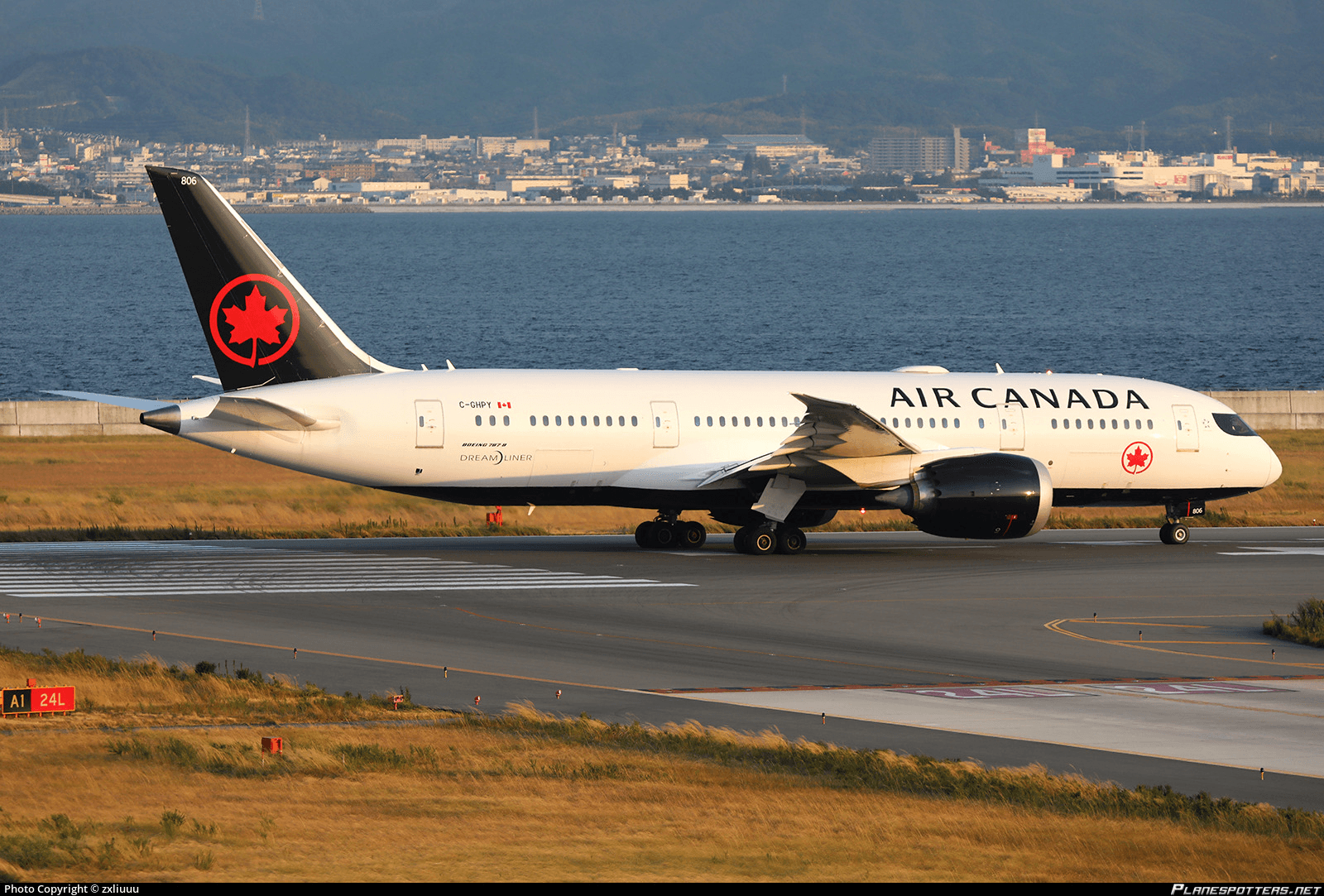
Air Canada 787-8 Seat Guide (2026) | Best & Worst Seats, Specific Rows
TL;DR
Air Canada 787-8 has 238 seats: 40 in Signature Class (Business), 21 in Premium Economy across 3 rows, and 177 in Economy. Signature Class uses a 1-2-1 layout with direct aisle access; Business pitch is tight, so window seats 1A, 1K, 2A, 2K offer the most privacy. Best Economy seat: 12A or 12K (exit row, extra legroom, forward cabin). Worst Economy seat: any middle E seat on a full flight, or rows 48–50 near the rear galley and lavatories. Surprising insight: the 787-8's smaller Signature Class cabin (5 rows vs. the 787-9's 8) actually creates a quieter, more private Business experience if you avoid the windowless seats 5A and 5K.
Air Canada's 787-8 packs 238 seats across five Signature Class rows and a compact 21-seat Premium Economy cabin—but avoid 5A and 5K in Business, which lack windows entirely. The real gotcha is the 3-3-3 Economy layout: middle seats (column E) are brutal on full flights. What makes the 787-8 special is its lower cabin altitude and massive dimmable windows—if you can snag a window seat, the comfort advantage over older widebodies is immediate.
Quick specs
Cabin | Layout | Seats | Pitch | Width | IFE |
|---|---|---|---|---|---|
Business (Signature Class) | 1-2-1 | 40 | 6'8" (fully flat) | N/A | N/A |
Premium Economy | 2-3-2 | 21 | 38" | 17.7" | 9" HD touchscreen |
Economy | 3-3-3 | 177 | 31" | 17.1" | 9" HD touchscreen |
Business Class (Signature Class)
Signature Class features a 1-2-1 staggered layout across 5 rows (rows 1–5). All seats are direct aisle access; the two center seats (D and G) are separated by a privacy divider. Seats are Collins Pinnacle lie-flats with hammock-style headrests, 110V AC power, and shared USB-A. Best rows: 1, 2, and 3 (quieter, closer to galley service, forward cabin prestige). Worst rows: row 5 (rear-cabin isolation) and seats 5A/5K specifically (missing windows—avoid if natural light matters). Rows 4–5 also lack the noise insulation of the forward cabin.
Premium Economy
Premium Economy occupies rows 18–20 in a 2-3-2 layout (21 seats total). Pitch is 38 inches with wider 17.7-inch seats and leg rests. Features include a 9-inch pivoting HD touchscreen, 110V AC power, and USB-A. Best rows: bulkhead row 18A/B and 18J/K for extra forward legroom and privacy; row 19 or 20 for couples (A/B or J/K pairs avoid the middle seat E). Row 18 is noisier due to proximity to the galley but offers maximum legroom. Worth the upgrade on overnight flights over 7+ hours—the leg rest, wider seat, and quieter cabin justify the premium on long-haul Asia-Pacific routes.
Economy Class
Economy spans rows 21–50 in a 3-3-3 configuration (177 seats). Pitch is 31 inches with 17.1-inch width between armrests. IFE is a 9-inch pivoting HD touchscreen; power is shared 110V AC plus individual USB-A. Exit-row seats are in rows 35–36 and 43 (fees apply); these offer substantially more legroom. Avoid rows 48–50 (last three rows): increased noise from rear galley and lavatory, reduced recline, and poorest meal choice. Middle seat column E is least desirable on full flights. Acoustic sweet spot: rows 25–35 (forward cabin, ahead of rear galley). Bulkhead row 21 has no under-seat storage during taxi but extra legroom.
Best seats
Seat | Cabin | Why |
|---|---|---|
1A, 1K | Signature Class | Front-row direct aisle access, quietest cabin zone, first to board and deplane, maximum prestige and privacy with 1-2-1 stagger. |
2A, 2K, 3A, 3K | Signature Class | Direct aisle access in quiet forward cabin; 2A/2K avoid any noise from galley; 3A/3K still premium front-cabin positioning. |
18A, 18B, 18J, 18K | Premium Economy | Bulkhead row with maximum forward legroom; window seats (A, B, J, K) avoid middle-seat proximity and offer views of the 787-8's massive dimmable windows. |
35A, 35K, 36A, 36K | Economy | Exit-row seats (fees apply); substantial extra legroom (35+ inches) over standard Economy, forward enough to avoid rear-cabin noise. |
25A, 25K | Economy | Window seats in acoustic sweet spot ahead of rear galley; standard legroom but superior peace and quiet on overnight flights. |
43A, 43K | Economy | Second exit-row option if rows 35–36 unavailable; extra legroom compensates for proximity to rear lavatories. |
Seats to avoid
Seat | Cabin | Why |
|---|---|---|
5A, 5K | Signature Class | Missing windows entirely; no natural light despite premium pricing—major disappointment for long-haul overnight flights. |
5D, 5G | Signature Class | Rear-cabin isolation and reduced galley service speed compared to rows 1–3; feels separated from rest of Business cabin. |
48A–50K | Economy | Last three rows: maximum noise from rear galley and lavatories, reduced recline functionality, poorest meal availability, worst turbulence sensation at fuselage tail. |
Any E column | Economy | Middle seat in 3-3-3 layout; no window, no aisle access, trapped between two passengers on full flights—the worst of both worlds. |
37A–42K | Economy | Rows immediately behind exit rows (35–36); still loud, no extra legroom benefit, awkward proximity to rear galley traffic. |
✈️ Premium Economy Cabin
Air Canada's 787-8 Premium Economy cabin occupies rows 18–20 in a 2-3-2 configuration, providing 21 seats total—significantly narrower and more intimate than the 3-3-3 Economy cabin behind it. Each seat is 18.5 inches wide with 38 inches of pitch, paired with a leg rest, footrest, and direct aisle access from window and middle seats. The cabin sits forward of the main galley, isolating Premium Economy from service noise and lavatory queues.
Meal service in Premium Economy begins 15–20 minutes before Economy and features a dedicated menu: hot entrées (often superior cuts of protein), a cheese and charcuterie selection, and wine or beer service with full bar access. The presentation and portion sizes exceed Economy significantly. For overnight flights, cabin crew typically deliver pillows, blankets, and amenity kits (amenities vary by route; transatlantic flights include premium skincare) without request.
Lounge access is restricted to Star Alliance Gold members and business-class ticket holders; Premium Economy passengers on domestic and some regional international routes do not automatically access lounges unless they hold elite status. On transatlantic and transpacific routes, Air Canada occasionally grants lounge access to Premium Economy on select fares—verify at booking.
Best Premium Economy Seats:
Row 18A, 18B, 18J, 18K — Bulkhead row with extra knee clearance; avoid if you dislike window glare or prefer a blank wall ahead.
Row 19A/B and 19J/K — Center cabin, maximum privacy from lavatory traffic; ideal for couples seeking a quieter zone without bulkhead constraints.
Row 20A/B and 20J/K — Rear Premium Economy, closest to Economy but still acoustically isolated; best value if the cabin is oversold forward.
Avoid middle seats (D, E, F) — Even in 2-3-2, the center seat sacrifices direct aisle access and feels trapped between two passengers on full flights.
✈️ Version Lottery
Air Canada operates two distinct generations of 787-8 in its long-haul fleet, and the difference is material. The earlier 787-8s (c. 2014–2017) feature Collins Pinnacle seats with fixed headrests, shared armrest power, and an older 9-inch IFE touchscreen. The newer 787-8s (c. 2018–2020) retain identical seat width and pitch but upgrade to Collins Apex seats with adjustable headrests, USB-C ports alongside USB-A, and newer 11-inch HD touchscreens with faster processing and improved content libraries.
You can identify which version operates your flight by checking the seat map on ExpertFlyer (filter by aircraft registration) or Air Canada's booking engine—newer aircraft will list "Apex" or "Enhanced Premium Economy" in the product description, while older 787-8s simply state "Premium Economy" without qualifier. The airline website does not explicitly label seat generations, but live seat maps often show cabin layout differences (newer 787-8s display wider aisles and IFE screen icons). Alternatively, call Air Canada reservations and ask the agent directly: "Is this flight equipped with Collins Apex or Pinnacle seats?"
Whether to change flights or dates depends on your route and layover tolerance. On transatlantic routes (Toronto–London, Montreal–Paris) where Air Canada operates daily 787-8 service, newer aircraft are frequent enough that a 1–2 day shift is usually feasible and worth pursuing if you plan to work or watch films extensively. On less frequent transpacific routes (Toronto–Tokyo), the scheduling penalty may outweigh the seat upgrade unless you have flexible dates. The USB-C charging and larger IFE screen are the only meaningful differences for sleeping passengers; the Pinnacle headrest is adequate for overnight rest on both versions.
🏆 Competitive Verdict
On shared routes (Toronto–London, Vancouver–Tokyo), Air Canada's 787-8 Premium Economy cabin offers superior isolation and a genuine 2-3-2 configuration, but it loses decisively to British Airways' 787-9 Club World on every metric that matters: BA's 1-2-1 reverse-herringbone beds are fully flat and private, its amenity kit includes pajamas, and its spa lounge at London Heathrow is world-leading. For solo overnight travellers, choose BA; for couples and work-focused business travellers over 6 feet, BA's lie-flat bed is non-negotiable. Air Canada's 787-8 wins narrowly for families with children (the 2-3-2 layout allows one parent to sit between two kids) and for passengers seeking a quieter cabin without the premium price tag—but it is objectively a mid-tier long-haul product, not a competitor to hard business-class beds. If you are booking transatlantic Premium Economy, Air Canada's 787-8 is acceptable on a 7–8 hour overnight flight; on 10+ hour transpacific routes, the lie-flat advantage of competitors (United 787-10 Polaris, ANA First Class) becomes severe enough to justify a connection or airline switch.
🛁 Lounge & Ground Experience
Air Canada's primary hub for 787-8 operations is Toronto Pearson International (YYZ), where long-haul flights operate from Terminal 1. Premium Economy and business-class passengers access the Air Canada Signature Suite (ground floor, near Gate F1), a modern facility that opened in 2023 and replaces the older Maple Leaf Lounge.
Signature Suite Facilities:
Two shower suites with luxury amenities (Aesop products) and heated towel racks—bookable via the Air Canada app for 30-minute slots, $25 USD for non-lounge members.
À la carte dining counter with hot entrées (rotated seasonally), sushi, cheese selections, and wine/spirits bar; service is staff-assisted, not buffet-style.
Quiet zone with lounge chairs and individual reading lights—no spa beds, but several recliners offer semi-lie-flat angles.
Business center with Mac workstations, high-speed Wi-Fi (complimentary), and printing services.
No spa treatments on-site; facial and massage services are not available.
Lounge Access by Fare Class: Signature Class (Business) passengers and Star Alliance Gold members receive complimentary access. Premium Economy passengers do not have automatic access unless they hold Gold status or higher; however, oneworld partners (British Airways, Cathay Pacific) and some premium economy tickets on transatlantic routes include a single-use lounge pass. Domestic economy passengers and economy upgrades are excluded entirely.
Verdict: The Signature Suite justifies a Toronto connection if you are transitioning between domestic and international flights and have access (or can purchase a day pass for ~$80 CAD). The shower facilities are genuinely valuable before a 10-hour overnight flight, and the quiet zone offers a genuine refuge from terminal chaos. However, if you are a premium economy passenger without status, you will be denied entry unless you pay separately—a significant oversight in Air Canada's product positioning. On the same city pair (e.g., Vancouver–London), a direct flight with Air Canada avoids the Toronto layover entirely and saves 3–4 hours; the lounge advantage does not justify the routing penalty for most passengers.
🌙 Overnight Formula
Best Overnight Seat: 19A or 19K (Premium Economy, row 19, window seats). These seats sit in the center of the Premium Economy cabin, away from the bulkhead glare (row 18) and lavatory traffic (rows 20→Economy). The window location provides a physical barrier between you and adjacent passengers.
Does Air Canada 787-8 have lie-flat seats?
Yes—all 40 Signature Class seats are Collins Pinnacle lie-flats that recline to a full 6'8" bed. The 1-2-1 stagger also means direct aisle access from every seat, a major privacy advantage over 1-2-1 designs with center aisles.
Best seat for sleeping on Air Canada 787-8?
1A or 1K: front-row Signature Class, fully flat, direct aisle, quietest cabin zone. If confined to Economy, exit-row seat 35A or 35K offers the most recline (around 5 inches) and legroom to stretch out. Premium Economy row 19 (middle rows) is a good compromise if Business is unavailable—38-inch pitch and leg rests beat Economy.
Does Air Canada 787-8 have WiFi?
Air Canada 787-8 is equipped with Viasat satellite WiFi, available across all cabins. Speeds are adequate for email and messaging but not consistently fast for HD video on long-haul flights. Premium Pax (paid tier) offers faster priority bandwidth. Signal is strongest over North America and weakens over the Atlantic and Pacific.
Is Air Canada 787-8 Economy worth it on long-haul?
For routes under 6 hours (e.g., Toronto–London), Economy is acceptable given the 787-8's superior cabin altitude (6,000 feet vs. 8,000 on older widebodies) and dimmable windows. For 10+ hour routes (e.g., Toronto–Tokyo), Premium Economy is strongly recommended: the 38-inch pitch, leg rests, and quieter cabin justify the upgrade cost on overnight flights. Business Class is the gold standard but commands a 3–5x premium.
Which rows recline on Air Canada 787-8 Economy?
All Economy rows recline approximately 5 inches—including rows 48–50, though seat age or mechanical wear may limit some last-row recline. Bulkhead row 21 and exit rows 35–36 and 43 have full recline available.
Are there bassinet-equipped rows on the 787-8?
Yes—bulkhead row 21 (Economy) and row 18 (Premium Economy bulkhead) are equipped with fold-down bassinets. However, row 21 offers no under-seat storage during taxi, takeoff, and landing. Request bassinets at booking or check-in; availability is limited and not guaranteed on every flight.
How do I avoid middle seats in Economy?
Book early and select window (A, B, J, K) or aisle (C, H) seats. Middle column E seats are released last by Air Canada's seat selection algorithm and are generally the last to sell—avoid E seats on full flights. On short-haul flights with lower load factors, middle seats may remain empty.
air canada, 787-8, dreamliner, seat guide, 2026, signature class, business class, premium economy, economy, best seats, seats to avoid, lie-flat, exit row, window seat