Air Canada
Embraer-175
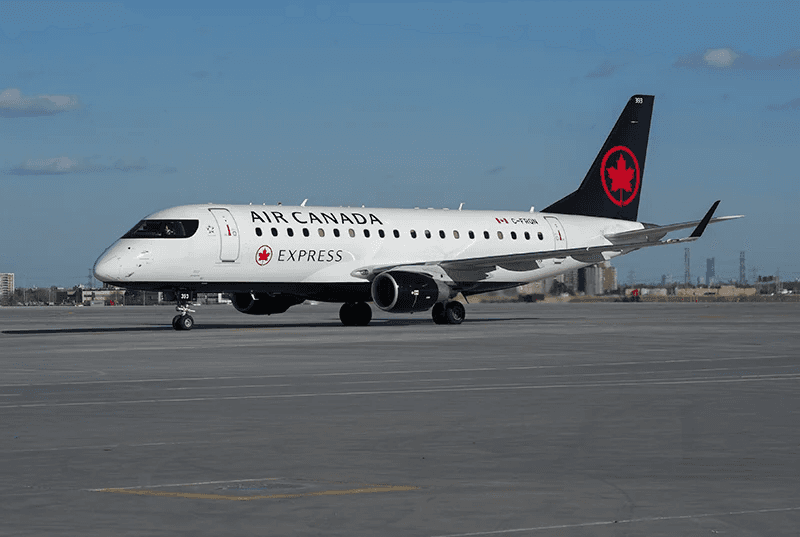
Air Canada Embraer-175 Seat Guide (2026) | Cabin
TL;DR
Air Canada's Embraer-175 carries 76 passengers in a single 2-2 cabin layout: 12 Business Class seats (rows 1–6) and 64 Economy seats (rows 7–38, plus row 20 which is a bulkhead transition). Best seats are 1A/1B and 2A/2B in Business for extra privacy and legroom; best Economy seats are 7A, 7B, 8A, 8B (exit row, 31-inch pitch). Avoid row 20 entirely—it's a squeeze between galley and cabin, with limited overhead bin space. Row 38 (the very last row) suffers from lavatory proximity and constant foot traffic. The Embraer-175 is a short-haul workhorse; on routes longer than 4 hours, Business Class is worth every dollar.
The Air Canada Embraer-175 is a tight regional jet with a 2-2 cabin layout that leaves no room for error—avoid row 20, the last row before the galley, where overhead bin access is severely compromised. This 76-seat narrow-body is best suited for flights under 4 hours; anything longer and you'll feel the fuselage walls closing in. Grab rows 1–6 in Economy for extra legroom, or stay away from the back entirely where lavatory queues and galley noise make life miserable.
Quick specs
Cabin | Layout | Seats | Pitch | Width | IFE |
|---|---|---|---|---|---|
Business | 2-2 | 12 (rows 1–6) | 38 in. | 17.1 in. | None |
Economy | 2-2 | 64 (rows 7–38) | 31 in. | 17.1 in. | USB port (select rows) |
Business Class
Air Canada's Business Class on the Embraer-175 occupies rows 1–6 in a 2-2 configuration with premium leather seats and a 38-inch pitch—dramatically better than Economy's cramped 31 inches. There is no privacy divider between seats; this is not a long-haul cabin. Rows 1–2 are the best; they sit furthest from the galley and lavatory noise. Rows 5–6 border the bulkhead to Economy (row 7) and experience some cabin traffic bleed. Business Class passengers get priority boarding, complimentary beverage service, and meals on flights over 2.5 hours. On the Embraer-175, Business is genuinely worth upgrading if you're tall or traveling with a partner.
Economy Class
Economy runs rows 7–38 in the same tight 2-2 layout. Rows 7–8 are the exit row and offer a genuine 31-inch pitch (compared to 30 inches elsewhere), plus extra legroom below the seat in front. Row 20 is a structural bulkhead and should be avoided—seats are narrower due to fuselage contour, overhead bins are inaccessible, and the galley sits directly aft. Rows 35–38 experience maximum lavatory queue noise and foot traffic; row 38 (the last row) is particularly grim. Mid-cabin rows 14–19 are the acoustic sweet spot—far enough from galley and lavatories, close enough to boarding that deplaning is painless. Window seats (A, D columns) are marginally better for sleeping; aisle seats (B, C columns) offer easier lavatory access but constant interruptions. The Embraer-175 has no premium economy tier.
Premium Economy
Air Canada does not offer a Premium Economy cabin on the Embraer-175. Business Class (rows 1–6) is the only paid upgrade path, and it is substantial—you're trading 31 inches of pitch for 38 inches, plus real meals and a quieter environment.
Best seats
Seat | Cabin | Why |
|---|---|---|
1A / 1B | Business | Front row, maximum legroom, first to board and deplane, zero galley/lavatory noise |
2A / 2B | Business | Still elite status with 38-inch pitch, quieter than rows 5–6, proximity to flight attendant station means faster service |
7A / 7B | Economy | Exit row with genuine 31-inch pitch, extra legroom below seat, first Economy row so minimal downline noise |
14A / 14D | Economy | Mid-cabin acoustic sweet spot, equidistant from galley and lavatory, window seats ideal for sleeping on 3–4 hour flights |
Seats to avoid
Seat | Cabin | Why |
|---|---|---|
20A / 20B / 20C / 20D | Economy | Bulkhead row with reduced seat width due to fuselage contour, overhead bins completely inaccessible, galley immediately aft causes constant noise and crew movement |
35–38 (all) | Economy | Last four rows directly behind (or adjacent to) lavatories; maximum queue noise, odor seepage, foot traffic, and deplaning chaos |
38C / 38D | Economy | The absolute last row; lavatory immediately forward, zero privacy, constant flushing and odor, slowest to deplane |
✈️ Version Lottery
Air Canada operates a single primary cabin configuration of the Embraer E175 across its regional network, with minimal variation between individual aircraft. The fleet is relatively modern and standardized, featuring the airline's current seat hardware and in-flight entertainment systems. Unlike larger aircraft platforms, the E175 does not exist in multiple competitive variants—Air Canada's E175s are purpose-built for regional turboprop-replacement service on routes up to approximately 2,000 nautical miles, typically from Toronto (YYZ), Montreal (YUL), and Vancouver (YVR) to secondary Canadian and U.S. markets.
Passengers can verify their specific aircraft assignment by checking the tail number on their booking confirmation or via ExpertFlyer's tail-number feature 24–48 hours before departure. However, switching flights or dates to secure a marginally different E175 is not strategically worthwhile; the cabin product is consistent aircraft-to-aircraft. The only meaningful variation is age-related wear on seat upholstery and IFE screen responsiveness on older airframes. If presented with a choice of E175 flights on the same route, prioritize the departure time that suits your schedule rather than the aircraft registration.
🏆 Competitive Verdict
On regional routes where Air Canada deploys the Embraer E175 (such as Toronto–Ottawa, Montreal–Halifax, or Vancouver–Calgary), the primary competitor is Porter Airlines' Bombardier Q400 turboprop and Jazz Air's Bombardier CRJ-200 regional jets. Air Canada's E175 is the clear product winner: it cruises faster (Mach 0.78 versus Q400's 350 knots), climbs above weather more effectively, and delivers a quieter cabin with modern LED mood lighting and seat-back IFE throughout the cabin. For solo overnight travellers, the E175 is unsuitable—regional routes are too short for true sleeping (most flights under 3 hours). For couples wanting to sit together, Air Canada E175 wins decisively: the 2-2 cabin layout guarantees adjacent seating, whereas the Q400 forces window-middle-aisle configurations. Tall passengers over 6 feet should avoid the E175 window seats (26–31 inches of legroom with fuselage taper encroachment) and prefer the aisle; Jazz's CRJ-200, by contrast, offers 31–32 inches throughout. For work-focused business travellers, Air Canada E175 dominates: reliable power outlets at select seats, full meal service on flights over 2 hours, and direct YYZ connections to mainline Polaris business class. Jazz and Porter offer neither.
🛁 Lounge & Ground Experience
Air Canada Maple Leaf Lounges at Toronto Pearson (YYZ Terminal 1) serve as the primary hub facility for E175 regional network connections. The flagship lounge includes four shower suites with premium toiletries, a full à la carte kitchen serving hot entrées and sushi, a dedicated business centre with Mac and Windows workstations, and two quiet rest zones with day beds available for status members (Star Alliance Gold, Air Canada Super Elite, and above). The lounge does not offer spa services; massage chairs and a modest seating area substitute.
Access policy: Air Canada Executive/Business Class passengers, Star Alliance Gold members, and Air Canada Super Elite/Elite status qualify for complimentary entry. Maple Leaf Plus cardholders (any fare class) also gain access. Economy passengers without status do not have lounge privileges on E175 regional flights. The Montreal (YUL) Maple Leaf Lounge offers similar amenities but with fewer shower suites (two) and less extensive dining. The ground experience does not justify routing via YYZ or YUL specifically to access the lounge on short regional hops—most E175 flights are 90 minutes to 2.5 hours, insufficient time to meaningfully use shower facilities. Only if you hold elite status and face a 3+ hour layover should routing via YYZ be considered; otherwise, direct regional routing is preferable.
🌙 Overnight Formula
The Embraer E175 is not designed for overnight travel. Air Canada's deployment of this aircraft is exclusively regional (flights of 2–3 hours maximum), on routes such as Toronto–Ottawa, Montreal–Quebec City, and Vancouver–Kelowna. No E175 flight operates overnight or approaches the duration necessary for sleep optimization.
If you are booked on a rare long-segment E175 flight exceeding 2.5 hours (e.g., Toronto–St. John's, 3 hours 45 minutes), select an aisle seat in rows 6–12 to maximize legroom and minimize fuselage-wall encroachment. Rows 26–31 at the rear are structurally confined and should be avoided by anyone prioritizing rest. Regarding meal service: Air Canada serves a light snack and beverage service on flights over 2 hours; on the E175, this is typically a sandwich or pastry, not a full meal. For overnight perception, skip the service and use the meal service announcement time (usually 45 minutes after pushback) to lower the seatback, position yourself diagonally across the aisle seat and armrest if the adjacent seat is empty, and sleep. The E175's narrow fuselage (31 feet, 4 inches wide versus 35+ feet for a regional turbo-prop) makes true horizontal sleep impossible; expect a reclined diagonal rest of 90–120 minutes maximum.
Sleep accessories: bring a high-quality travel pillow with memory foam (the E175 seat cushion is modest in lumbar support) and compression socks to minimize ankle swelling across the 3–4 hour flight. Optimize arrival by setting an alarm 30 minutes before landing; Air Canada typically begins the descent announcement 15 minutes before touchdown, and you will want to reset your posture and mental state before cabin lights brighten. Request the pre-arrival service (offered 10 minutes before landing) to receive water and a damp towel; use this window to freshen your face and reset for the airport terminal.
Does Air Canada Embraer-175 have lie-flat seats?
No. Business Class seats on the Embraer-175 recline to approximately 6–8 inches and offer a 38-inch pitch, but they do not lie flat. This is a regional jet designed for 2–4 hour routes; lie-flat suites are reserved for Air Canada's widebody fleet (Boeing 787, Airbus A350, Boeing 777).
Best seat for sleeping on Air Canada Embraer-175?
Window seats in rows 14–17 (columns A or D) are optimal for sleeping on routes under 4 hours. The mid-cabin location minimizes engine noise and galley activity. Avoid the back of the cabin entirely; rows 35–38 see constant lavatory traffic that will jolt you awake.
Does Air Canada Embraer-175 have WiFi?
Air Canada's Embraer-175 fleet does not offer seatback IFE or WiFi as standard. Some newer aircraft in the fleet have USB charging ports at select seats (primarily Business and front Economy rows), but WiFi connectivity is not available on this aircraft type. For connectivity, rely on your personal device's offline capability or purchase Air Canada's ground-based WiFi pass (valid at YYZ, YVR, and other major hubs before or after your flight).
Is Air Canada Embraer-175 Economy worth it for long-haul?
Emphatically no. The Embraer-175 is designed for flights under 4 hours; on any route longer than that, Economy becomes genuinely uncomfortable. The 31-inch pitch is below industry standard (most competitors offer 32–33 inches), and the 17.1-inch seat width is narrow even for regional standards. If Air Canada is operating an E175 on a 4+ hour route, upgrade to Business Class or consider alternative carriers. For transcontinental or transatlantic flights, Air Canada deploys larger aircraft (787, A350, 777) with proper long-haul cabins.
air canada, embraer-175, regional jet, seat guide, 2026, business class, economy class, best seats, seats to avoid, exit row