Best Airlines from London to Singapore (2026)
LHR ↔ SIN
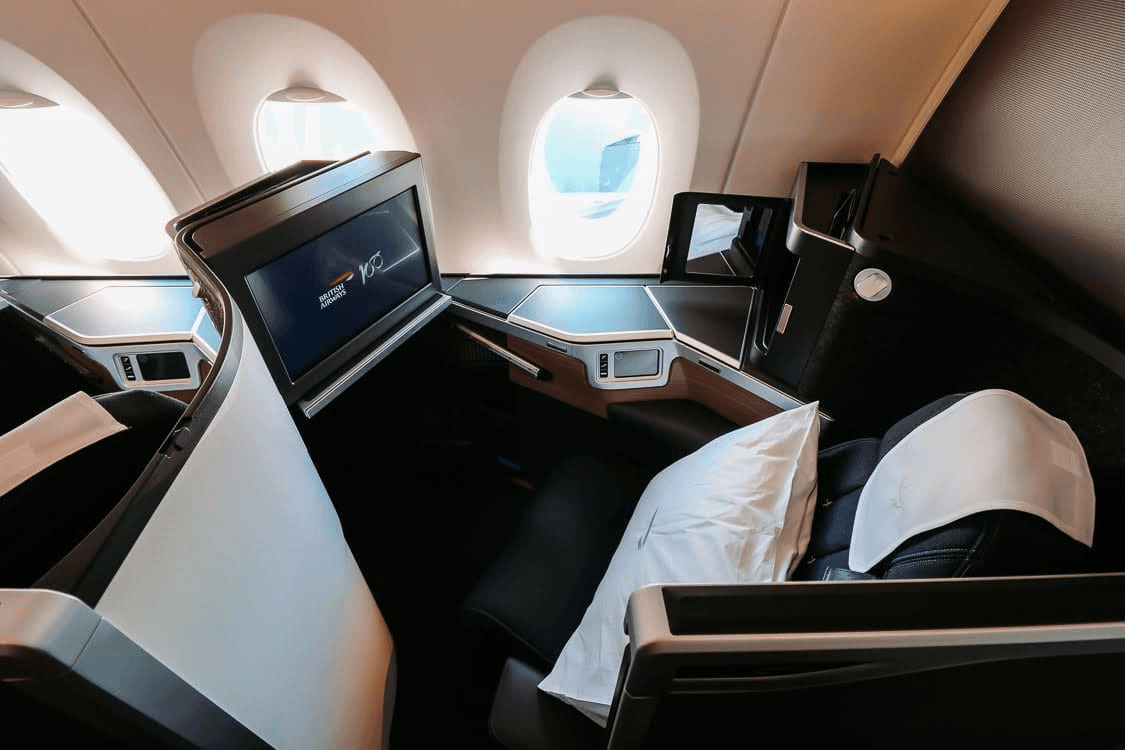
British Airways Club Suite on the A350-1000 dominates Business Class on this 13-hour route with superior privacy and lie-flat comfort, but Singapore Airlines' newer 777-300ER configurations offer competitive hard products. Qantas operates via stopover hubs, making it a less direct choice. Watch for aircraft swaps on BA services—the older 777-200 Club World is a significant downgrade.
TL;DR
British Airways Club Suite (A350-1000, window or centre-pair suites with doors) is the best Business Class product on this route, offering direct LHR–SIN with excellent privacy and modern amenities. For Economy, Singapore Airlines offers the most generous pitch on their 777-300ER forward mini-cabin; Qantas Economy is noticeably more cramped on their A380 main deck. Premium Economy is worth considering on BA or SQ for the 13-hour haul if you can secure it within 30–40% of Business pricing—the cabin isolation and recline make sleep substantially easier than Economy. Aim for overnight departures (typically 22:00–23:30 LHR) to sleep through the flight and arrive mid-morning SIN local time. Route-specific gotcha: BA frequently swaps A350s for older 777-200 Club World on this route depending on maintenance; always verify aircraft on booking.
Airlines flying LHR ↔ SIN
British Airways operates daily direct service with A350-1000 (primary) and 777-200/300ER (backup), featuring Club Suite Business and World Traveller Plus Premium Economy. Singapore Airlines flies daily with 777-300ER and A350-900 configurations, offering newer Business Class suites and competitive Economy. Qantas operates 3–4 times weekly but via stopover (typically Dubai or Melbourne), using A380 and 787, making journey time 18–24 hours total.
Business Class on LHR ↔ SIN
British Airways Club Suite on the A350-1000 is the definitive best product: door-equipped individual suites with direct aisle access, excellent recline, and integrated IFE. Singapore Airlines' 777-300ER Business Class (newer configurations with suite-style seating) is competitive but lacks the privacy of BA's doors; the A350 version is marginally better but less frequent on this route. Avoid BA's 777-200 Club World at all costs on this route—the older 1-2-1 layout offers poorer privacy, limited recline, and faces lingering fatigue from the 14+ hour sector. Always confirm A350-1000 before booking BA Business Class.
Premium Economy on LHR ↔ SIN
British Airways World Traveller Plus and Singapore Airlines Premium Economy both operate on this route. BA's cabin (on A350/777/787) is slightly more self-contained and quieter; Singapore Airlines offers marginally better catering. Premium Economy is genuinely worthwhile on a 13-hour red-eye if priced within 30–40% of Business—the 8-inch pitch gain, direct aisle access, and cabin isolation make sleep materially better than Economy. Below that premium, the value softens; above it, Business Class becomes more tempting.
Economy on LHR ↔ SIN
Singapore Airlines 777-300ER forward Economy mini-cabin (2-3-2 or 3-3-3 select rows) offers the most generous experience with quieter service and quicker boarding; their standard cabin is still competitive at 31–32 inches pitch. British Airways offers solid 31-inch pitch Economy across the A350 and 777, with good IFE and no WiFi paywall. Qantas A380 Economy is noticeably cramped at 31 inches on the main deck and heavily congested near rear galleys; avoid unless significant fare advantage exists. For a 13-hour flight, SQ's forward cabin or BA A350 window seats in rows 30–50 are your best Economy bets.
Best for each cabin
Cabin | Winner | Why |
|---|---|---|
Business | British Airways A350-1000 Club Suite | Door-equipped suites, direct aisle access, modern flat-bed, superior privacy on 13-hour red-eye |
Premium Economy | British Airways A350 / 777 World Traveller Plus | Self-contained cabin, quieter than SQ, good recline, reasonable price-to-Business ratio |
Economy | Singapore Airlines 777-300ER forward mini-cabin | 2-3-2 seating in quieter zone, fastest boarding/deplaning, superior service consistency |
Avoid on this route
Cabin | Avoid | Why |
|---|---|---|
Business | British Airways 777-200 Club World | Older 1-2-1 layout, poor privacy, limited recline, fatigue-prone on 14-hour sector; frequent aircraft swap risk |
Economy | Qantas A380 main deck rear cabin | 31-inch pitch, heavy congestion near galleys/lavs, noticeably slower service on long-haul; only viable if significant fare advantage |
🏆 The Big Three (Plus Turkish) Verdict
Qatar Airways wins Business Class outright. The QSuite remains the industry standard for solo travellers — direct-aisle access, closing doors, and a genuinely private flat bed make it the gold standard for sleep and productivity on a 13-hour sector. For couples, the centre-pair configuration is unmatched; two seats that convert into a single double bed with a shared minibar and storage is the best paired experience available on this route.
Emirates takes the ground experience and consistency crown. Their A380 routing on LHR–DXB–SIN is more reliable than Gulf peers, their lounge network is superior, and their Economy product (especially the A380 upper deck) punches above its weight. However, their Business Class (older First/Business configuration on 777s, or newer business on 787) lags Qatar's QSuite for privacy and flat-bed quality.
Etihad's 787 Business (Residence and Studio product) is genuinely excellent but operates fewer frequencies LHR–AUH–SIN than Qatar or Emirates. Under new Etihad management, the product is refined, but availability and routing flexibility favour Qatar and Emirates.
Turkish Airlines (via IST) offers competitive fares and decent Business Class (older flat beds on 777s, newer on 787), but adds 2–4 hours of journey time and IST is a weaker hub for connections and ground experience versus DXB or DOH.
Budget-conscious travellers: Turkish and Etihad typically undercut Qatar and Emirates on Economy fares; expect 15–25% savings, offset by longer journey times and fewer schedule options.
🛂 Hub Stopover Intelligence
Strongest hub for a long stopover: Dubai (DXB). The city itself is genuinely worthwhile, the airport is efficient, hotels are abundant and reasonably priced, and Emirates' stopover programme includes complimentary hotel rooms for connections of 8+ hours (Economy) or 5+ hours (Business) on qualifying tickets. You can leave the airport, spend 6–10 hours exploring Dubai, and arrive in Singapore refreshed.
Weakest: Doha (DOH). While Hamad Airport is architecturally impressive, Doha city is less compelling, and Qatar Airways' stopover policy is restrictive. A 90-minute DOH connection is a genuine sprint; a 3-hour connection is survivable but tight. Only pursue a DOH stopover if you've already flown Qatar to DXB or AUH before and want to see it; otherwise, avoid.
Tolerable layover windows:
DXB: 3 hours (comfortable domestic connection), 5–6 hours (enough to shower and rest in lounge), 8+ hours (worth leaving airport for a city experience).
DOH: 2 hours (tight but doable if you're fast), 3 hours (manageable if you skip the city), 5+ hours (enough for airport lounge and a brief nap).
AUH: 2.5–3 hours (tight), 4+ hours (lounge rest or city visit).
IST: 2.5 hours (fast connection), 4+ hours (genuinely worth a city walk or lounge rest).
Complimentary hotel eligibility: Emirates offers free hotels for connection times of 5+ hours (Business Class) or 8+ hours (Economy) on EK-operated segments. Etihad occasionally offers hotel vouchers on 8+ hour layovers (check at check-in or via status). Qatar Airways does not routinely offer complimentary hotels on connections.
🌙 Schedule & Jet Lag
Best schedule for jet lag minimisation: Evening departure from LHR (20:00–23:00), arriving Singapore 15:00–18:00 local time (+8 hours ahead). This mimics a delayed sleep cycle, allows you to sleep through the night in the air, and lands you in the afternoon — ideal for checking in, resting at the hotel, and sleeping at the destination's bedtime. First-time travellers find this least disruptive.
Schedule to avoid: Early morning LHR departure (06:00–09:00), arriving Singapore 20:00–23:00 local time. You lose a full night's sleep, arrive exhausted in the evening, and must force sleep immediately. Compounded by a hub stopover (adding 3–5 hours), you're awake for 24+ hours straight — punishing for first-time travellers and anyone sensitive to jet lag.
Does the hub stopover help or hurt? A stopover acts as a partial body-clock reset if timed well. An 8-hour DXB stopover with a hotel room allows genuine sleep, landing you in Singapore more aligned to local time. However, a tight 2–3 hour connection or a long 5–6 hour lounge wait simply extends fatigue without providing real recovery. Verdict: Only pursue a stopover if it's 5+ hours and you can sleep; otherwise, accept it as dead time and book the longest overnight flight you can tolerate.
For frequent travellers: The red-eye (late departure, early morning arrival) is familiar and allows morning arrival rest at destination. Seek a schedule that lands you by 12:00–14:00 local time, giving you a full afternoon and evening before bed.
For travellers continuing beyond Singapore: Check your onward flight time before optimising the LHR–SIN leg. If you're continuing to, e.g., Sydney on an evening flight, a morning arrival in Singapore is ideal (rest midday, depart evening). If you're staying 2+ days, the schedule matters less.
💳 Award Booking Sweet Spot
Qatar Airways QSuite (LHR–DOH–SIN) via British Airways Avios: Typical pricing is 144,000 Avios one-way in Business Class (off-peak) or 180,000–220,000 (peak), depending on season. This remains one of the strongest award sweet spots globally; the QSuite is worth £4,500–6,500 in cash, so Avios redemption at 3–4 cents per point delivers genuine value. Avios transfers from American Express Membership Rewards, transferrable credit cards, or BA's own earning rate make this accessible to most premium card holders.
Emirates (LHR–DXB–SIN) via Skywards: Expect 120,000–150,000 Skywards miles in Business Class. Skywards is harder to accumulate outside the Emirates ecosystem, but American Airlines AAdvantage members can book Emirates via AAdvantage at similar rates (130,000–160,000 miles). Both represent decent value but lag Qatar's liquidity and transferability.
Etihad (LHR–AUH–SIN) via American Airlines AAdvantage: Typically 140,000–160,000 AAdvantage miles in Business Class. AAdvantage is easier to accumulate (Chase credit cards, Amex), but Etihad award availability is patchier than Qatar and Emirates. Best used if you have excess AAdvantage miles.
Turkish Airlines (LHR–IST–SIN) via United MileagePlus or Air Canada Aeroplan: 100,000–130,000 miles in Business Class, making it the cheapest award option by volume. However, you're paying in miles for an inferior product (longer routing, older hard product on some aircraft). Only attractive if you have an excess balance in either programme.
Strongest-value programme on LHR–SIN: British Airways Avios. Qatar QSuite availability is consistent, Avios transfer easily from premium credit cards, and the redemption rate (3+ cents per point) is genuinely strong on this route. If you don't have Avios, build them via Amex Platinum (1.5x on flights), Barclays Avios cards, or direct BA bookings, and wait for an off-peak window (September–October, February–March) to hit the 144,000 sweet spot.
What is the best airline for LHR ↔ SIN in Business Class?
British Airways Club Suite on the A350-1000. Book window suites (1A, 1K) for solo travellers or centre pairs (2D/2E or 2G/2H) for couples—all feature individual doors, direct aisle access, excellent recline, and top-tier privacy. Confirm aircraft at booking; if 777-200 shows, rebook or consider Singapore Airlines.
How long is the flight from London to Singapore?
~13 hours block time on direct flights (BA, SQ). Qantas typically involves a 4–6 hour stopover, making total journey time 18–24 hours. For sleep quality and fatigue, the direct overnight departure from LHR (departing 22:00–23:30) works best, arriving SIN around 15:30–16:30 local time the next day.
Which airline has the best Economy on LHR ↔ SIN?
Singapore Airlines 777-300ER forward mini-cabin (rows 30–38, typically 2-3-2 or select 3-3-3 rows). Pitch is a competitive 31–32 inches, but the cabin is noticeably quieter, service is faster, and boarding/deplaning is streamlined. BA Economy is solid overall (31 inches, good IFE), but SQ's forward zones edge ahead for a 13-hour night flight.
Is Premium Economy worth it on LHR ↔ SIN?
Yes, if priced within 30–40% of Business Class fare. The 8-inch pitch increase (to 38 inches), direct aisle access, and cabin isolation on BA or SQ Premium make sleep substantially better than Economy on a 13-hour overnight. If the premium exceeds 45% of Business Class price, Business becomes the better value; if below 25% of Economy, take it without hesitation. Check both BA and SQ pricing—they often differ significantly.
What is the route-specific gotcha on LHR ↔ SIN?
British Airways frequently swaps the A350-1000 Club Suite for older 777-200 Club World on this route due to maintenance rotations and wider fleet scheduling. The 777-200 product is materially inferior (older layout, limited privacy, poorer recline). Always verify aircraft type in your booking confirmation and seat map; if it shows 777-200, contact BA to confirm or rebook. This is the single biggest downside risk on the route.
lhr, sin, london, singapore, route guide, europe_meaf, 2026, business class, premium economy, economy, best airlines, british airways, singapore airlines, qantas, a350, 777