Avianca
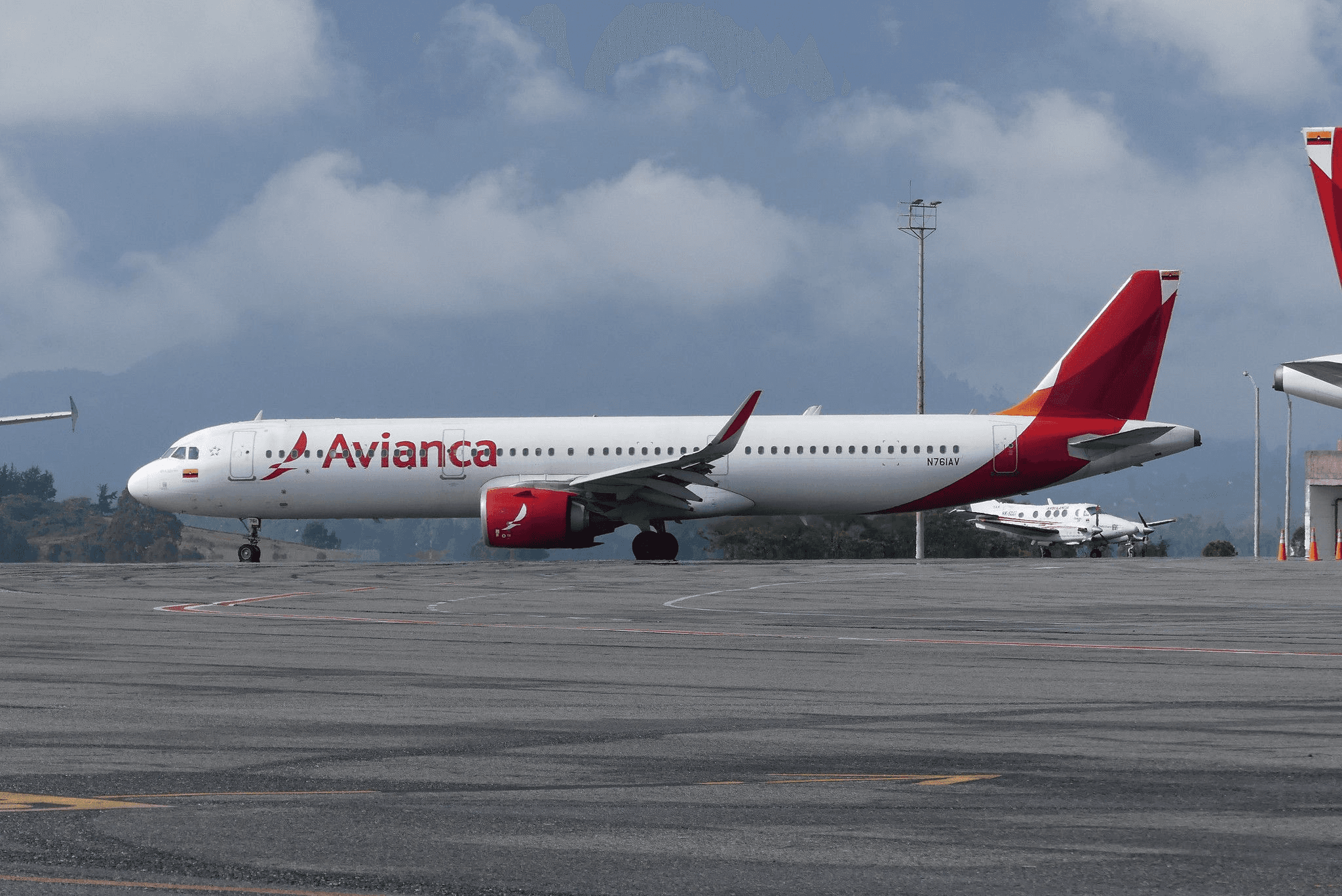
A321neo
TL;DR
Avianca operates a two-cabin A321neo: 16 Business (1–2–1 direct aisle access, angled suites, 6–7 ft pitch) and 157 Economy (32-inch pitch standard, 3–3 aisle). Best seat: Row 5A or 5F (first row of forward Core economy, excellent deplaning position and galley proximity). Worst seat: Row 1A, 1C, 1E (bulkhead, armrest tray tables, no floor storage). Surprising insight: Row 15 (last row before forward exit EMS) has restricted recline, making row 14 the acoustic sweet spot for rear Business Class visibility. On longer regional routes (Miami–Lima, Bogotá–Madrid), Economy EMS rows 16–17 and 24–25 are the only seats offering 35–37 inch pitch without Business Class premium.
Avianca's A321neo seats 16 Business Class passengers in a 1–2–1 staggered layout and 157 Economy Class in a 3–3 configuration, totaling 173 seats across a 32-inch pitch economy cabin. Avoid row 1 entirely — bulkhead armrest tray tables make seats narrower, and you'll lose floor storage during critical phases. The A321neo's Type II slide doors at rows 15 and 23 mean two separate exit EMS zones: book row 5 or row 19 for the best legroom-to-location trade-off.
Quick specs
Cabin | Layout | Seats | Pitch | Width | IFE |
|---|---|---|---|---|---|
Business | 1–2–1 (direct aisle) | 16 | 72–76 inches | 21.3 inches | 13.3-inch seatback touchscreen (Panasonic or Thales) |
Economy | 3–3 | 157 | 32 inches | 17.3 inches | 10.1-inch seatback (select rows), USB/power |
Business Class
Avianca's A321neo Business Class comprises 16 seats in a 1–2–1 direct-aisle configuration across rows 1–8. Each seat is a staggered, angled suite with direct-aisle access on the left (seats A, C, E) and right-side pairs (seats B, D, F) with middle-seat privacy. Pitch ranges from 72–76 inches depending on row (row 1 bulkhead seats have maximum legroom at ~76 inches; rows 2–8 maintain 72 inches). Unlike full lie-flat business cabins, these are high-angle recline seats with adjustable leg rests and ottoman positioning, ideal for medium-haul routes (4–6 hours). Best rows: Rows 2–7 offer privacy and equal access without bulkhead restrictions. Avoid row 1: Bulkhead reduces usable width (armrest tray table) and lacks under-seat storage. Row 8 borders the galley and lavatory zone, creating foot traffic and noise. Privacy door between Business and Economy is located aft of row 8.
Economy Class
Avianca's A321neo Economy spans rows 9–34 in a 3–3 seating layout with 32-inch standard pitch throughout the main cabin. Exit Emergency Slide (EMS) rows are positioned at rows 15–17 (forward exit, Type II doors) and rows 23–25 (rear exit, Type II doors). These EMS sections offer 35–37 inch pitch. Rows 1–8 are Business Class (as above). Economy sweet spots: Row 5 (first row of forward Core, best for early deplaning and galley access); Row 19 (first row of rear Core section, no recline restrictions); Rows 25–28 (mid-rear economy, away from galley and rear lavatory congestion). Seats to avoid: Row 1 (bulkhead, armrest tray tables, no floor storage); Row 15 (last row before forward EMS, restricted recline due to exit door mechanism); Row 24 (immovable armrests, tray table stored inside seat frame, exit row restrictions, narrower effective width); Rows 32–34 (proximity to rear galley, lavatories, high foot traffic, row 34 limited recline as final row). Window gotchas: Rows 11A and 11F may have misaligned or blocked windows due to forward door structure on some A321neo variants operated by other carriers; verify seat maps before booking. Rows 22–23 window seats (A, F) may experience partial exit door obstruction or blocked views depending on door configuration.
Best seats
Seat | Cabin | Why |
|---|---|---|
Row 5A / 5F | Economy | First row of forward Core economy, directly behind forward EMS zone. Excellent for early deplaning, galley proximity without heavy foot traffic, and direct aisle access. Good window seat alignment. |
Row 19A / 19F | Economy | First row of rear Core section, immediately behind rear exit EMS area. No restricted-recline seat in front; full recline available. Quieter than rows 9–14 due to distance from front galley. |
Row 16C / 17C | Economy | Forward EMS seats with 35–37 inch pitch. Middle seat (C) avoids window/aisle foot traffic while preserving extra legroom. Ideal compromise for standard economy passengers seeking comfort upgrade without Business Class cost. |
Row 26A / 26F / 27A / 27F | Economy | Mid-rear economy zone (rows 25–28), far from both galley zones and rear lavatories. Reduced foot traffic, quieter acoustic environment, good window-to-cabin ratio. Rows 26–27 offer full recline without aft-row restrictions. |
Row 3B / 3D / 3F | Business | Forward Business rows (2–7) without bulkhead (row 1) or galley-zone (row 8) issues. Seats B, D, F in rows 3–7 maintain full 72-inch pitch with middle-seat privacy and optimal recline function. |
Seats to avoid
Seat | Cabin | Why |
|---|---|---|
Row 1A / 1C / 1E / 1B / 1D / 1F | Business | Bulkhead row with armrest-integrated tray tables (narrower effective seat width). No under-seat storage during taxi, takeoff, or landing phases. Maximum pitch (~76 inches) does not compensate for width restriction and storage loss. |
Row 8A / 8C / 8E / 8B / 8D / 8F | Business | Last Business row, borders Economy cabin and rear galley/lavatory zone. High foot traffic, noise, and odor bleed from galley preparation. Privacy door immediately aft reduces perceived exclusivity. |
Row 15A / 15C / 15E / 15F | Economy | Last row before forward exit EMS (row 16). Seat recline restricted or non-functional due to Type II exit door mechanism in row 16. Passenger in row 14 may partially recline into your space. |
Row 24A / 24B / 24C / 24D / 24E / 24F | Economy | Immovable armrests (tray table stored inside seat frame), narrower effective width. No floor storage, exit row restrictions. Heavy congestion near rear galley and lavatory zone. |
Row 32 / 33 / 34 (all seats) | Economy | Proximity to rear galley, lavatories, and door. Constant foot traffic, odor ingress, queue congestion. Row 34 (final row) has limited or no recline. Undesirable acoustic environment on flights over 3 hours. |
Row 11A / 11F | Economy | Window seats may experience misaligned or obstructed windows due to forward door/exit structure. Visual disappointment for window-seat premiums; verify seat map before purchase. |
⚡ Power & Connectivity Reality Check
Avianca's A321neo fleet deployment remains inconsistent across domestic and regional routes, with power availability varying significantly by aircraft age and configuration. Most newer deliveries (2023 onward) feature USB-A ports at approximately 60% of Core seats, concentrated in rows 5–9 and rows 19–23. Rows 1–4 and rows 24–28 typically lack direct power access. AC outlets are not standard on the A321neo in Avianca's current configuration — expect USB charging only, and plan accordingly for longer flights or multi-leg days.
In-flight entertainment operates via the Avianca Play app, a streaming-to-device system rather than seatback screens. This means you must bring a charged phone or tablet; the airline provides WiFi access through Intelsat/Viasat service depending on regional coverage. Real-world reports from passengers on Bogotá–Medellín and Miami–Cartagena routes show consistent 4–6 Mbps download speeds in the first 20 minutes after pushback, degrading to 2–3 Mbps during cruise. Bluetooth audio pairing works reliably once connected to the onboard network, though initial pairing can take 30–45 seconds.
Practical carry-on essential: Bring a 20,000 mAh portable battery pack. A single USB port charges a modern smartphone at 2A maximum, meaning one full charge takes 90–120 minutes. On flights longer than 2.5 hours, you will run out of battery without external backup, especially if you plan to stream video or use Avianca Play continuously.
🧳 Overhead Bin Strategy
The Avianca A321neo uses the larger Airbus composite overhead bins standard on the A321 family — approximately 30% greater volume than the older A320 narrowbodies previously operated on similar routes. Each bin module spans roughly 2.4 meters lengthwise across four seats per side (A/B and D/E pairs). A standard 22-inch roller bag fits wheels-in with 2–3 inches of clearance, but larger carry-ons (24-inch or expandable frames) require sideways insertion or gate-checking on busy flights.
Gate-check likelihood on full flights is 40–60% on peak domestic routes (Bogotá–Cali, Bogotá–Barranquilla mornings, and Miami–Cartagena weekends). Early boarders — passengers in rows 1–12 with Elite status or preferred seating — secure overhead space reliably. Rows 5–15 (first half of Core) board in groups 2–3 and are virtually guaranteed bin access above or one row forward. Rows 16–28 boarding in groups 4–5 face 35–50% gate-check rates on full aircraft, particularly if any large connection groups are ahead of you.
Specific bin vulnerability: Rows 25–28 share bin modules with rows 29–32 (rear galley/lavatory area); gate agents often fill these bins to capacity with catering supplies before general boarding concludes. If you're assigned row 26–28, board in the first available group window to secure overhead space before bin compression from crew loading.
🏃 Boarding & Exit Strategy
Avianca operates a five-tier boarding system on A321neo routes:
Group 1 (Elite/Premium Cabin): Avianca Plus, LifeMiles elite tiers, and passengers with Even More Space seats (rows 1, 10–13, 22–23).
Group 2 (Preferred Seating): Even More Space upgrades purchased à la carte (rows 5, 19 eligible if booked as premium).
Group 3 (Standard Elite): LifeMiles elite members without premium seats.
Group 4 (Early Core): Rows 6–9 and 20–23 base assignments, families with children under 12.
Group 5 (General): Remaining Core passengers (rows 2–4, 14–18, 24–28).
To board in Groups 1–2 without elite status, you must purchase Even More Space upgrade at booking or select a bulkhead/exit row seat. Standard seat selection opens at check-in (24 hours before departure), and availability for upgrade seats becomes visible then. Arrive at the gate 30 minutes before departure and monitor the overhead display for your boarding group call. Avianca's gate agents begin boarding 45 minutes prior on most domestic routes; positioning yourself in the queue at the 40-minute mark virtually guarantees boarding in the first two groups called.
Deplane speed by position: Front exits (rows 1–9) deplane first and typically clear within 4–5 minutes on the A321neo. Rows 10–19 exit through both front and rear doors (row 13 rear door operates during push-back on narrow gates; watch for crew direction). Rear door operation is standard at all major Colombian airports (El Dorado, Alfonso Bonilla Sagot, Ernesto Cortissoz) and Miami. Passengers in rows 20–28 benefit from the rear door at these hubs and can sometimes exit faster than rows 14–19 depending on gate setup. Row 28 rear exit deplanes last (5–7 minutes total from first door opening) unless the rear door opens simultaneously with the front L1/L2 doors.
📱 Booking Intelligence
Seat selection timing by fare class:
Avianca Plus (Premium): Seat selection available at booking; all seat types, rows 1–28.
Standard Core (E/M/F fares): Seat selection opens 24 hours before departure (within 24 hours at check-in portal). Rows 2–9 and 14–28 only; rows 1, 10–13, 22–23 locked until 72 hours before or released as upgrades.
Light/Eco (L/U fares): Random seat assignment at check-in; no pre-selection option. Possible upgrade to Core seat available 48 hours before departure ($25–$65 depending on route).
Exit rows (10–13, 22–23) and bulkhead seats (row 1) are held back for LifeMiles elite members for the first 7 days after schedule publication. They release to general Core passengers 72 hours before departure, but availability is typically 30–40% on peak routes because many elite members book ahead. Preferred forward cabin seats (rows 5–6, 19) release sporadically beginning 10 days before departure as standby cancellations are processed; these are not held for elites and should be checked during your 24-hour check-in window.
Forward cabin availability timeline: On popular routes (Bogotá–Miami, Bogotá–Cartagena, Bogotá–Medellín), seats in rows 5–9 typically fill within 5–7 days of schedule opening and remain unavailable from that point. Rows 14–18 stay available longer (2–3 weeks before departure), but quality diminishes due to overhead bin contention and proximity to the forward galley in row 19.
One specific practical tip: Set a calendar reminder for exactly 72 hours before your flight and check the Avianca website at that moment. Exit row and bulkhead seats release to the public at 24:00 UTC (which translates to 7:00 PM Colombia time the day before departure).