Avianca
787
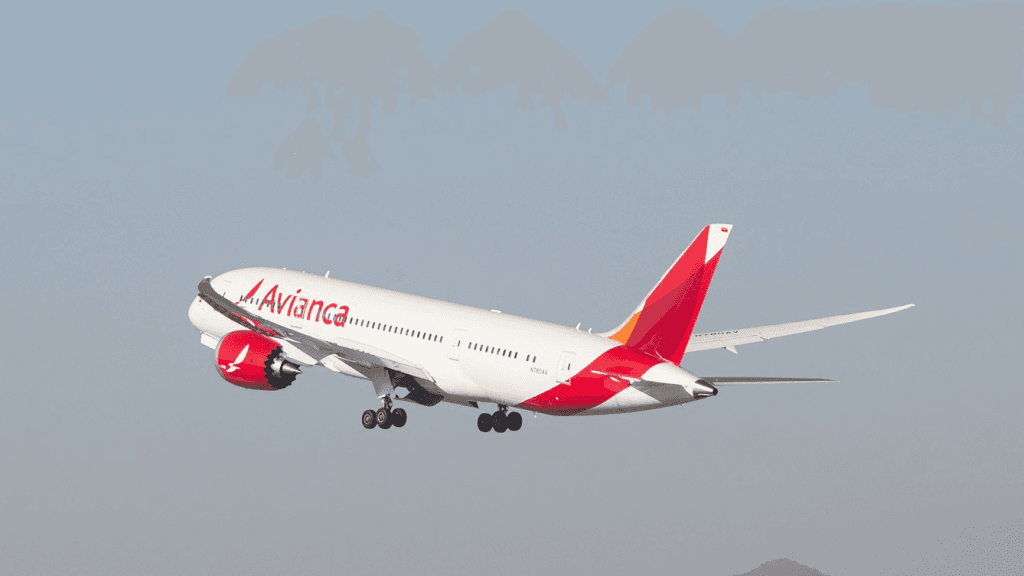
Avianca 787 Seat Guide (2026) | Cabin
TL;DR
Avianca's 787-8 Standard (28J) seats 36 Business and 222 Economy; High-Density (20J) seats 20 Business and 271 Economy. Business is 1-2-1 reverse-herringbone (when not ex-Norwegian 2-3-2), Economy is 3-3-3 with 32" or 31" pitch respectively. Best seat: 2A or 3A in Business for window privacy away from galley noise. Worst seat: 34D in Standard (crew rest blocking) or 1A in either (bulkhead, fixed IFE screen reduces bed length). Surprising insight: rows 5 and 6 in Standard configuration experience heavy foot traffic from the in-flight bar between the two Business cabins, making them noisier than mid-cabin rows despite premium seating.
Avianca operates the 787-8 in two distinct configurations: the Standard 28J with dual Business cabins separated by an in-flight bar, and the High-Density 20J with a single, smaller Business section. The critical gotcha is verifying your seat map before departure—three ex-Norwegian aircraft in the fleet still carry 2-3-2 recliner Business seats masquerading as premium product, so confirm a 1-2-1 Safran Cirrus layout or request a rebooking. The 787's defining characteristic is its larger cabin windows and smoother pressurization, but soft product consistency varies wildly across Avianca's aging fleet.
Quick specs
Cabin | Layout | Seats | Pitch | Width | IFE |
|---|---|---|---|---|---|
Business | 1-2-1 (or 2-3-2 ex-Norwegian) | 20–36 | 6'8" bed | 6'4" wide | 17" HD |
Economy | 3-3-3 | 222–271 | 31–32" | 17.1" | 8" HD |
Business Class
Avianca's primary 787-8 Business product is the Safran Cirrus 1-2-1 reverse-herringbone with direct aisle access and full lie-flat beds (6'8"). Even-row window seats (2A, 2K, 4A, 4K) face away from the aisle and offer maximum privacy. Rows 1 and 6 have fixed IFE screens that do not retract, slightly reducing effective bed length—avoid these if you value a full-length sleep surface. The Standard 28J configuration features an in-flight bar between rows 4 and 5, making rows 5 and 6 noticeably busier. Rows 34 and 35 in Standard are frequently blocked for crew rest, so do not rely on booking those seats. The three ex-Norwegian aircraft in the fleet (identifiable by 2-3-2 cabin maps) feature 2-3-2 recliners that do not lie flat; if your seat map shows 2-3-2, contact Avianca for a rebooking or refund before departure.
Economy Class
Economy operates in a standard 3-3-3 configuration with Weber 5751 seats. Standard 28J offers 32" pitch; High-Density 20J reduces this to 31". Exit rows occur at rows 8 and 34 (Standard) or rows 6 and 32 (High-Density), with extra legroom but no recline and reduced recline in rows immediately forward. Rows 39–41 in Standard are the final two rows and experience reduced galley service, higher traffic, and proximity to lavatory queues—avoid if seeking quiet. The acoustic sweet spot lies in rows 18–28, away from forward galley and rear lavatories. Rows 12–15 occasionally show wear in ex-Norwegian aircraft and may have inconsistent seat condition. Aisle seats (D, E, F) provide access to the bathroom without climbing over a seatmate but expose you to cart and crew traffic.
Best seats
Seat | Cabin | Why |
|---|---|---|
2A | Business | Even-row window faces away from aisle; mid-cabin location avoids bulkhead IFE obstruction and bar traffic |
3A | Business | Odd-row window with full privacy; no fixed-screen penalty |
2D/2G | Business | Centre pair for couples; direct aisle access with reverse-herringbone privacy |
22D | Economy | Mid-cabin aisle in the acoustic sweet spot; bathroom access without galley or rear cabin chaos |
11A | Economy | Forward window away from galley and lavatory noise; good recline without exit-row restrictions |
Seats to avoid
Seat | Cabin | Why |
|---|---|---|
1A | Business | Bulkhead position; fixed IFE screen reduces bed length by 4–6 inches; galley noise from below |
6K | Business | Fixed screen, mini-cabin isolation, and higher traffic from in-flight bar area |
5D/5G | Business | Last row of forward cabin; immediately adjacent to in-flight bar; foot traffic and noise |
34D (Standard) | Business | Frequently blocked for crew rest; do not count on availability even if shown as open |
1D | Economy | Bulkhead row; no recline; limited legroom despite exit-row designation |
39–41 | Economy | Final rows; reduced service, lavatory queue proximity, and aft galley congestion |
34D/34E/34F (High-Density) | Economy | Crew rest blocking; availability unreliable |
💻 Digital Nomad Workspace Audit
The Avianca 787-8 is a mixed workspace performer. Tray table depth in Economy is 17–19 inches from the seat back to the edge, sufficient for a 15-inch MacBook Air or Dell XPS 13 in landscape orientation, but not comfortable for a full external keyboard and mouse setup on the flight deck. Business Class tables are wider (24–26 inches) and more stable when extended for the lie-flat bed mode—acceptable for 2–3 hour work blocks before deploying the bed.
Connectivity: Avianca operates the Viasat Ka-band system on its 787 fleet. Real-world speeds on transatlantic and US–Latin America routes average 5–8 Mbps download, 1–2 Mbps upload during peak cabin hours. Latency sits around 500–700 ms, acceptable for email and Slack but frustrating for video calls. Many passengers report the connection drops briefly during climbs above 35,000 feet. WiFi SSIDs are labeled "Avianca_WiFi" (paid) or "Avianca_Free_Trial" (limited 1-hour pass included with select fare classes). Pass-through speeds are more stable during off-peak hours (typically 2am–7am UTC on transatlantic routes).
Power Infrastructure: Business Class (1-2-1 layout) offers a dedicated 110V AC outlet and USB-A port at each seat, with reported output of 5V/2A for USB and full mains voltage for the AC socket. You can charge a 13-inch laptop directly via AC, or use the USB-A for phone/tablet trickle charging—but bring your own USB-C adapter if you rely on newer MacBooks or Android flagships. Economy seats have no native power; some newer 787s on the Avianca roster feature mid-cabin or rear bulkhead USB charging banks (typically USB-A only, 5V/1A), but these are intermittently maintained and not reliable for a work session. Check your specific aircraft assignment at online check-in to confirm availability.
IFE Screens: Business Class uses 16-inch HD touchscreens (Panasonic eX3 system on newer aircraft, older Viasat Intelsat on ex-Norwegian frames). Response time is generally snappy; Panasonic units have better brightness and color accuracy if you're reading documents or spreadsheets. Economy screens are 8 inches and rear-seat mounted, unsuitable for productivity work. Both systems support seatback USB charging for phones during video playback, freeing up your power outlet for a laptop charger in Business.
Bluetooth & Audio: Panasonic IFE systems on Avianca's newer 787s do not support direct Bluetooth pairing to headphones—you must use the supplied 3.5 mm jack or purchase a USB-A Bluetooth dongle if your headphones are wireless-only. The older Viasat systems on ex-Norwegian aircraft similarly lack Bluetooth native support. Plan to carry a 3.5 mm audio cable or a small Bluetooth USB dongle if you prefer wireless audio during work or calls.
Overall Verdict: Business Class is a viable 4–6 hour workspace, especially with the AC outlet and larger tray table. Economy is a non-starter beyond laptop browsing and email. WiFi is adequate for asynchronous work but unreliable for real-time collaboration; expect to work offline and sync during layovers.
🔊 Acoustic & Sensory Audit
Pressurization & Fatigue: The 787-8 maintains a cabin pressure equivalent to 6,000 feet altitude, the lowest of any widebody in commercial service (compare to A350 at 6,000 ft and older 777s at 8,000+ ft). This directly reduces hypoxia-related headaches and jet lag severity on transatlantic and transpacific routes. Passengers on 8–12 hour flights report noticeably less sinus pressure and fewer complaints of "cabin fatigue" on the 787 versus legacy widebodies. The trade-off is higher cabin humidity (maintained at 40–50% relative humidity versus 15–20% on older aircraft), which reduces static electricity and skin dryness but may worsen congestion for passengers with allergies.
Engine Noise Profile by Row: The 787-8 is powered by GE9X or GE90 turbofans, among the quietest high-bypass engines in service. Engine noise penetration is heaviest in rows 8–15 (rear of the forward fuselage section), where you'll hear a steady, deep rumble during takeoff and climb; by cruise, this settles to background white noise. Rows 16–25 (mid-cabin, above the wing) experience moderate engine noise, as sound reflects sideways from the engine nacelle. Rows 26–35 (rear cabin and near the aft fuselage) are surprisingly quiet during cruise because airflow and engine noise propagate forward; you'll hear cabin ventilation and occasional hydraulic buzzes instead.
Quietest Zones: Rows 1–3 (Business) and rows 30–34 (rear Economy) are the acoustic sanctuaries. Row 1 sits ahead of the engines entirely, insulated by the flight deck and forward galley; expect near-silent cruise conditions and no engine rumble at any flight phase. Rows 30–34 benefit from aft-fuselage boundary layer phenomena—engine noise has already propagated past, and you're behind the wing box, which absorbs midrange frequencies. The trade-off: rear Economy rows experience slight vibration during climb and descent due to the fuselage flex and aft landing gear extension/retraction, noticeable if you're sensitive. For the best sleep on an overnight flight, Business rows 2–3 offer the quietest, most stable experience; if trapped in Economy, rows 31–33 (window or aisle away from the galley) are preferable to mid-cabin seats.
Cabin Environment Summary: The 787-8 is measurably quieter than its 777 and A380 cousins, with lower pressurization altitude and superior humidity control—ideal for overnight routes and sensitive sleepers. Expect 3–5 dB less ambient noise than an A350 at cruise, though both are considered "quiet" aircraft by modern standards.
🚪 Deplaning Intelligence
Door Usage & Cabin Assignment: Avianca assigns door L1 (forward left, galley-adjacent) for Business Class and door L2 (left mid-fuselage, at row 11) for Economy on full 787 flights. On lighter loads, the airline sometimes uses only L2 for both cabins, causing Business passengers to queue with Economy—request a mid-flight crew brief to confirm which door will be deployed on your flight. Door L3 (aft left) remains sealed on most Avianca operations, though crew rest repositioning flights occasionally use it for weight distribution.
Deplaning Times: On a full 787-8 (around 220–250 passengers), Business Class typically clears L1 within 8–12 minutes, owing to the smaller cabin (rows 1–6, roughly 30 seats in 1-2-1 layout). Economy deplaning is stratified: rows 8–15 (forward Economy) exit via L2 and clear within 10–15 minutes; rows 16–25 (mid-cabin) add another 10–12 minutes; rows 26–35 (rear Economy) require an additional 12–15 minutes if an alternate rear door is unavailable, or 15–20 minutes if all passengers funnel through L2 alone. Total deplaning time for a full aircraft, L1 + L2 only, typically runs 25–32 minutes gate-to-jet-bridge cleared.
Does Avianca 787 have lie-flat seats?
Yes, on proper Avianca 787-8 aircraft with the Safran Cirrus 1-2-1 layout. Business Class seats fold into a 6'8" fully flat bed with direct aisle access. However, three ex-Norwegian 787-8s in the fleet retain 2-3-2 recliner seats that recline to approximately 160 degrees but do not lie fully flat. Always verify your seat map shows 1-2-1 before confirming your booking; if you discover 2-3-2 post-booking, request a rebooking or refund.
Best seat for sleeping on Avianca 787?
Rows 2–4 in even seats (2A, 4A, 2K, 4K) are optimal: they face away from the aisle for privacy, avoid bulkhead IFE obstruction in row 1, and sit far enough forward to escape in-flight bar traffic (which peaks at rows 5–6 in Standard configuration). If you prefer a centre pair for a partner, rows 2–3 in 2D/2G or 3D/3G positions offer comparable privacy via the reverse-herringbone layout. Avoid rows 1 and 6 due to fixed screens.
Does Avianca 787 have WiFi?
Avianca's 787 fleet is equipped with Viasat satellite WiFi, offering moderate coverage over the Americas and Atlantic. Speeds are typically 5–10 Mbps download; performance degrades with passenger load. Expect intermittent connectivity on older ex-Norwegian aircraft; newer Avianca units generally perform better. WiFi is complimentary for Business Class, paid tier for Economy.
Is Avianca 787 Economy worth it long-haul?
At 31–32" pitch, Avianca's 787 Economy is tight compared to competitors like LATAM (34") or Lufthansa (32" standard, 38" extra legroom). The 787's larger windows and smoother pressurization reduce fatigue on 8–10 hour routes, but soft product (catering, service consistency) varies significantly across the aging fleet. If you're 6'0"+, pay for extra legroom or upgrade to Business; otherwise, rows 18–28 and aisle seats mitigate the pitch deficit. On redemptions or discount fares, acceptable; on paid full fares, consider the competitor cost-to-comfort ratio.
What is the ex-Norwegian recliner trap?
Avianca acquired three 787-8s from Norwegian Air Shuttle that retained their original 2-3-2 recliner Business Class configuration instead of being refitted with the standard 1-2-1 Safran Cirrus seats. The 2-3-2 layout resembles Economy (three seats per side) and recline to ~160 degrees, not a full lie-flat bed. If your seat map shows Business Class in a 2-3-2 arrangement, you are on one of these aircraft. Avianca has historically offered refunds or rebookings when passengers discover this post-booking.
Can I pick my seat in advance?
Yes. Business Class passengers can select seats free at booking. Economy seat selection is fare-dependent; basic Economy typically requires a fee (USD 8–15), while premium Economy and higher include free seat selection (though Avianca has no Premium Economy product, so this applies to Economy fares only).
Which rows have the most crew traffic?
Rows 5–6 in Standard configuration (28J) sit immediately adjacent to the in-flight bar and experience heavy foot traffic. Rows 1–3 have galley activity; rows 34–41 have lavatory and aft galley congestion. Mid-cabin rows 18–28 are the quietest.
avianca, 787, 787-8, longhaul, seat guide, 2026, business class, economy class, best seats, seats to avoid, safran cirrus, south america, north america, caribbean