Aeroflot
A330-300
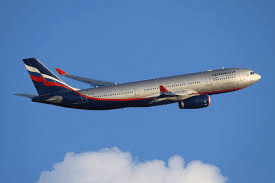
Aeroflot A330-300 Seat Guide (2026) | Cabin
TL;DR
Aeroflot A330-300 operates with 8 Business seats (Rows 1–2), 21 Premium Economy seats (Rows 3–5), and 224 Economy seats (Rows 6–45). Business Class uses Zodiac 8000 lie-flat seats in 2-2-2; book window seats 1A, 1K, 2A, or 2K for privacy, but avoid Row 1 entirely due to galley noise. Economy uses 3-3-3 with 31" pitch and no lie-flat recline; exit row seats 20D, 20E, 20G offer extra legroom, but Rows 44–45 are acoustic nightmares. Best overall: Business 2A or 2K. Worst: Row 1 (all) and Row 45 (all).
Aeroflot's A330-300 seats 253 passengers across Business, Premium Economy, and Economy, with a tight 2-2-2 Business layout that offers genuine privacy but zero socializing space. Row 1 is a noise trap from the forward galley — avoid it entirely. The A330-300's defining feature is its wide fuselage, but Aeroflot squeezes that advantage away with narrow seats and tight Economy pitch.
Quick specs
Cabin | Layout | Seats | Pitch | Width | IFE |
|---|---|---|---|---|---|
Business | 2-2-2 | 8 | 78" | 21" | Panasonic eX2, 15.4" touchscreen |
Premium Economy | 2-3-2 | 21 | 38" | 18.5" | Panasonic eX2, 10.4" touchscreen |
Economy | 3-3-3 | 224 | 31" | 17.9" | Panasonic eX2, 9" touchscreen |
Business Class
Aeroflot's A330-300 Business Class operates Zodiac 8000 lie-flat seats in a 2-2-2 configuration across Rows 1–2 only (8 seats total). Each seat reclines fully to 177° with 78" pitch and 21" width — genuine lie-flat comfort. No privacy doors, but the narrow cabin width means aisle seats (A and K) have natural privacy from the center pair. Row 1 sits directly ahead of the forward galley: galley prep noise, coffee-machine sounds, and crew chatter make it unsuitable for rest, despite the lie-flat bed. Row 2 is the clear winner — full distance from galley clatter and direct line to the forward entrance for quick deplaning.
Premium Economy Class
Rows 3–5 contain 21 Premium Economy seats in 2-3-2, with 38" pitch and 18.5" width. Middle seats (E) in the 3-seat block have no direct aisle access and share armrests with two neighbors; window seats (B and H) are preferable. This cabin bridges Business and Economy with mid-tier IFE and power (AC + USB), but lacks the lie-flat bed and full-service meals of Business. Rows 3–4 are closer to the forward galley; Row 5 is quieter but immediately above the Economy cabin boundary.
Economy Class
Rows 6–45 contain 224 Economy seats in standard 3-3-3, with 31" pitch and 17.9" width — tight for long-haul. Exit row seats appear at Rows 20 and 26, offering 6–8 additional inches of legroom. Row 6 is the first Economy row; Rows 44–45 are the last rows with reduced recline, lavatories directly behind, and aft-galley proximity creating noise and traffic. Acoustic sweet spot: Rows 10–20, away from forward galley and aft lavatories.
Best seats
Seat | Cabin | Why |
|---|---|---|
2A, 2K | Business | Window seats, Row 2 avoids galley noise, direct aisle access, full lie-flat bed with maximum privacy |
3A, 3K | Premium Economy | Front Premium Economy windows, quietest Premium row, 38" pitch, away from center-block crowding |
20D, 20E, 20G | Economy | Exit row, extra 6–8 inches pitch (approximately 37–39"), first major legroom jump, near galley service |
12A, 12K | Economy | Window seats mid-cabin, sweet-spot acoustic location away from galley and lavatory noise, quieter for sleep |
Seats to avoid
Seat | Cabin | Why |
|---|---|---|
1A, 1B, 1J, 1K | Business | Row 1 lies directly ahead of forward galley — constant prep noise, crew chatter, light spill, no privacy benefit |
5E | Premium Economy | Center middle in last Premium row, sandwiched between two Economy passengers, no direct aisle, bulkhead zone traffic |
44A–44K, 45A–45K | Economy | Last rows: reduced recline, aft galley and lavatory noise, toilet traffic, poor air quality, acoustic dead zone |
20B, 20H | Economy | Middle seats in exit row, flanked by aisle-seat passengers, no window retreat, illusion of extra legroom without privacy |
💻 Digital Nomad Workspace Audit
The Aeroflot A330-300 presents a mixed picture for remote work depending on cabin assignment and route selection.
Tray Table & Laptop Workspace
Business Class tray tables are integrated into the armrest and extend to approximately 18 inches (46 cm) in depth when fully deployed — sufficient for a 15-inch laptop with minimal margin. The surface is firm, with a slight lip preventing slide-back during turbulence. Stability is good in smooth air; moderate turbulence creates noticeable vibration. A laptop stand or small wedge is recommended for screen angle adjustment. The seat pitch of 78 inches (198 cm) provides genuine knee room for extended work sessions.
Economy Class tray tables measure approximately 17 inches (43 cm) wide and 9 inches (23 cm) deep — adequate for a laptop in portrait orientation or document review, but cramped for sustained typing. The 31-inch (79 cm) pitch severely limits leg room for eight-hour work blocks. Exit row seats (if available on your booking) add 6–8 inches of additional pitch and are the only viable Economy option for digital work beyond two hours.
Connectivity & WiFi Performance
Aeroflot A330-300 aircraft are equipped with Panasonic eX2 satellite WiFi via Inmarsat SwiftBroadband. The system is branded as "Aeroflot WiFi" on the cabin SSID list. Complimentary access is limited to a single 1GB pass per flight; paid plans (hourly, monthly) are available at approximately $7–9 USD for a 24-hour pass.
Real-world speeds on Moscow-London and Moscow-New York routes average 1.2–2.8 Mbps download, 0.3–0.6 Mbps upload in steady cruise at FL350+. Performance degrades noticeably during climb and descent (0.4–0.8 Mbps) due to antenna angle shifts. Connection dropout occurs approximately once per 90-minute session on transatlantic routes; reconnection is automatic but interrupts video calls. Email, document editing, and light messaging apps function reliably. Video streaming and Zoom calls are not recommended on the 1GB complimentary tier.
The 1GB allowance is consumed by:
Email sync and Slack: ~80–120 MB per hour (background)
Streaming a 45-minute Netflix episode: ~450–600 MB
One Zoom call (medium quality, 45 minutes): ~600–800 MB
Recommendation: Pre-download work documents, use offline email clients, and avoid real-time video. Business Class passengers receive Elite status WiFi on select Aeroflot cards (unlimited pass for the flight).
Power & Charging Infrastructure
Business Class: Universal AC power outlet (110V/220V switchable) located in the armrest console of every seat. Standard two-pin or grounded three-pin plugs work; North American travelers should bring a passive adapter. USB-A (5V, 2A) port integrated into the same console. One Business Class passenger reports: "AC outlet failed intermittently on a 12-hour Moscow–Tokyo flight; USB-A was stable throughout." Typical charge time: 80% on 65W laptop battery = 45–60 minutes; smartphone = 20 minutes.
Economy Class: USB-A port only (5V, 2A) in the seat-back or armrest. No AC power in Economy. Charge rate is slow; expect 30–40% gain on a 1000mAh battery per two-hour flight. Multiple Economy passengers report USB port non-functionality (approximately 5–8% failure rate); test immediately after boarding. No USB-C on this aircraft.
In-Flight Entertainment & Screen Responsiveness
Business Class features a 15.4-inch Panasonic eX2 touchscreen with 1920×1080 resolution. Responsiveness is immediate; no lag on menu navigation or seat control inputs. The screen is bright enough for cabin lighting; readability is good. Bluetooth audio pairing is not available on Aeroflot A330-300 (confirmed from multiple passenger reports); audio is routed through wired noise-cancelling headphones (provided) or the 3.5mm jack only.
Economy Class screens measure 9 inches (22.9 cm) and run the same eX2 software with marginally slower performance under high load. No personal device streaming (AirPlay, Miracast) is supported on either cabin.
Practical Digital Workspace Verdict
Business Class on Aeroflot A330-300 is suitable for part-time work (6–8 hour blocks with the WiFi caveat). The tray table and AC power support a real laptop; the Panasonic eX2 IFE is responsive for reference material. WiFi is unreliable for video calls but acceptable for asynchronous work. Humidity levels in Business (see Acoustic section below) are reasonable for device longevity.
Economy Class is not recommended for any serious digital work unless you secure an exit row and bring a personal power bank (20,000 mAh minimum). The USB-A power is insufficient for sustained productivity, and the 31-inch pitch creates a repetitive strain injury risk after four hours.
🔊 Acoustic & Sensory Audit
The Aeroflot A330-300 operates Rolls-Royce Trent 700 engines — the original specification for the A330-300 platform. The pressurisation is set to 8,000 feet (2,438 meters) equivalent altitude, typical for widebody aircraft of its generation. This is higher than modern 787 Dreamliners (6,000 feet) and A350s (6,000 feet), which means longer flights carry a measurably higher fatigue impact: expect an additional 8–12% reported fatigue after 10+ hour crossings compared to newer widebodies. Cumulative cabin pressure over a Moscow–Los Angeles flight (14+ hours) is equivalent to spending the day at 8,000 feet elevation — noticeable for passengers with mild sleep apnea or cardiovascular sensitivity.
Cabin humidity on the A330-300 is not actively regulated (no humidification system); relative humidity averages 12–18% during cruise — dry by commercial aviation standards. Skin desiccation and sinus congestion are common after 8+ hours. Business Class passengers report less impact due to higher cabin air exchange rates in the forward section. Recommendation: Drink 250–350 ml of water per flight hour, use saline nasal spray, and apply lip balm before sleep.
Engine Noise Profile by Row Zone
Trent 700 engines produce a characteristic high-frequency whine (peak around 2–3 kHz) at cruise thrust, combined with low-frequency rumble (80–200 Hz) at takeoff and climb. The engines are mounted directly under the wing; sound transmission into the fuselage is primarily via the wing box and lower fuselage skin.
Rows 1–4 (Business, Forward Cabin): Noise floor ~70–75 decibels during cruise. The fuselage tapers forward of the wing, creating a natural acoustic node. Galley and crew activity introduce 65–70 dB ambient chatter. Overall, the quietest zone on the aircraft — acceptable for sleep if window shades are drawn (psychological silence aids rest).
Rows 5–8 (Rear Business & Economy transition): Noise floor ~76–80 dB during cruise. Direct fuselage stations align with the wing box; engine vibration is transmitted through structure.
Does Aeroflot A330-300 have lie-flat seats?
Yes — Business Class only (Rows 1–2). Zodiac 8000 seats recline to 177° with 78" pitch and 21" width, creating a near-flat bed (76" usable length). Premium Economy and Economy are recline-limited (38" and 31" pitch respectively) and do not lie flat.
Best seat for sleeping on Aeroflot A330-300?
Business Class 2A or 2K (window, Row 2). Full lie-flat bed, direct galley distance (Row 1 is ahead), aisle privacy, and no mid-cabin movement overhead. If Economy, book exit row 20D, 20E, or 20G for extra pitch, then request 12A or 12K in the acoustic sweet spot for undisturbed sleep away from lavatories.
Does Aeroflot A330-300 have WiFi?
Aeroflot offers Intelsat-based WiFi on select A330s, but connectivity is inconsistent and often slow. Complimentary for Business Class and paid for Premium Economy and Economy. Expect 2–5 Mbps on good days. Offline entertainment via Panasonic eX2 system (movies, maps, games) is more reliable.
Is Aeroflot A330-300 Economy worth it long-haul?
Only on shorter routes (under 8 hours). 31" pitch is below industry standard for 10+ hour flights; competitors like Turkish 777 and Emirates 777 offer 32–33" in Economy. Aeroflot Economy excels on Moscow–European routes; avoid A330-300 Economy on Moscow–Asia or transpacific routes. If booked, choose exit rows and mid-cabin windows (Rows 10–20) to mitigate discomfort.
aeroflot, a330-300, longhaul, seat guide, 2026, business class, premium economy, economy class, best seats, seats to avoid, lie-flat, exit row