Aeroflot
A321
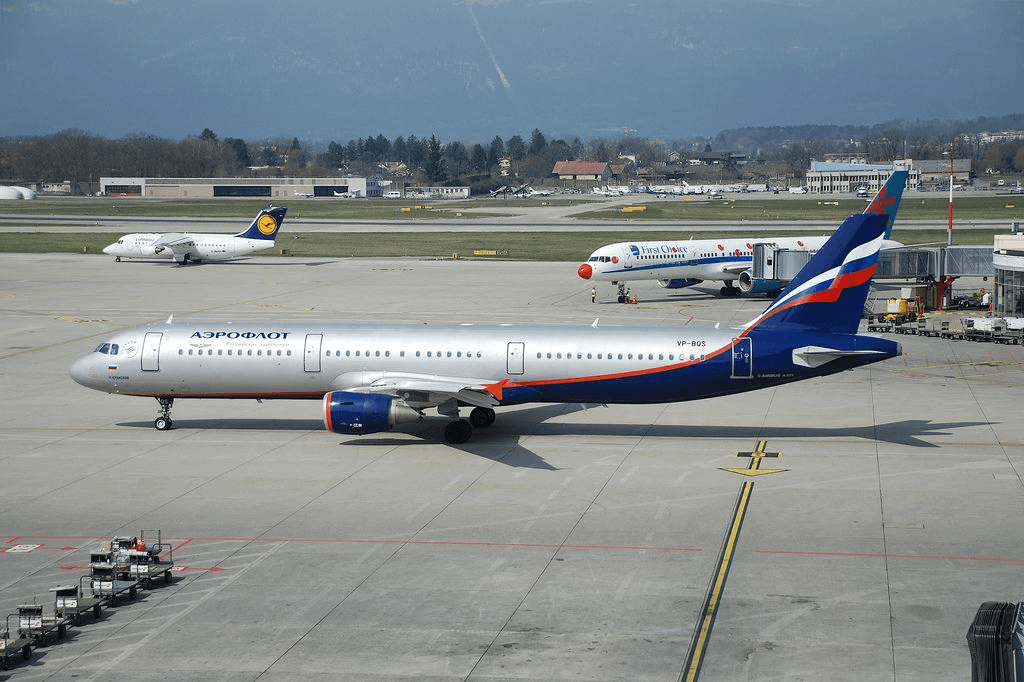
Aeroflot A321 Seat Guide (2026) | Cabin.coach
TL;DR
Aeroflot A321 operates 20 Business Class seats (rows 1–4, 1-2-1 staggered layout) and 206 Economy Class seats (rows 5–42, 3-3 layout). Best seat overall: 11A or 11F (overwing exit row, 35-inch pitch, full window). Worst seat: row 42D (last row centre, no window, full lavatory traffic, tightest pitch at 31 inches). Surprising insight: Aeroflot's Business Class uses direct-aisle access on alternating rows, so seat 1A and 3A are premium solo positions worth bidding up—you never share armrests.
Aeroflot's A321 seats 226 passengers across Business and Economy, but the real win is row 11—exit row legroom at 35 inches without the cold draft penalty. The gotcha: rows 1–4 Business are staggered 1-2-1, meaning odd rows (1, 3) are solo seats facing the aisle, while even rows (2, 4) are paired. On ultra-long-haul flights, the narrowbody A321 cabin pressure sits above international standard, so expect less fatigue—but Economy pitch drops to 31 inches in rows 32–42.
Quick specs
Cabin | Layout | Seats | Pitch | Width | IFE |
|---|---|---|---|---|---|
Business | 1-2-1 | 20 | 38–40" | 18.5" | 12–15" seatback |
Economy | 3-3 | 206 | 31–35" | 17.2" | 10.6" seatback (rows 32+) |
Business Class
Aeroflot's Business Class occupies rows 1–4 in a 1-2-1 staggered configuration: odd rows (1, 3) have single seats with direct aisle access; even rows (2, 4) have two-seat pairs facing the pair across the aisle, separated by a centre divider. All Business seats recline 6–8 inches to a near-flat position (not full flat). Row 1 is the prime row—seats 1A and 1C are solo aisle-access seats with bulkhead legroom (~40" pitch). Row 2 is paired but offers the same pitch; avoid rows 3–4 if you value privacy, as the 1-2-1 layout forces four-person clusters across the aisle. No privacy doors between Business and Economy.
Economy Class
Economy spans rows 5–42 in a 3-3 layout (A/B/C left, D/E/F right). Standard pitch is 31–32 inches. Exit rows 11–12 (over the wing) offer 35-inch pitch—the best Economy legroom. Row 5 (directly behind Business) is quieter but narrower due to galley bulkhead; rows 6–10 are mid-forward, closest to the cockpit and furthest from rear lavatories. Rows 32–42 (rear Economy) drop to 31-inch pitch and sit above the rear lavatories (odour and noise). Rows 41–42 are the tightest and noisiest; avoid these unless economy of cost overrides all comfort. No seat-back recline in rows 32+.
Best seats
Seat | Cabin | Why |
|---|---|---|
11A, 11F | Economy | Overwing exit row with 35-inch pitch — best Economy legroom on the aircraft. Full windows, quiet, away from lavatories. |
1A, 1C | Business | Solo seats with direct aisle access and 40-inch pitch. Bulkhead legroom, first to deplane, no middle neighbour. |
6A, 6C, 6D, 6F | Economy | Mid-forward cabin, 31-inch pitch but furthest from rear lavatories. Acoustic sweet spot between galley and exit rows. |
2A, 2C | Business | Paired Business seats with 38-inch pitch, direct aisle access via staggered 1-2-1 layout. Good for couples or business partners. |
Seats to avoid
Seat | Cabin | Why |
|---|---|---|
41D, 41E, 42D, 42E | Economy | Last two rows: narrowest seats (fuselage taper), tightest pitch (31 inches), no window (except aisle-side), constant lavatory traffic, highest noise. |
3B, 3E, 4B, 4E | Business | Centre seats in the staggered 1-2-1 layout — cramped paired arrangement facing across the aisle. Less privacy than aisle-access solo seats. |
5B, 5E | Economy | Directly behind Business Class galley. Middle seats with no window and heavy foot traffic. Galley crew noise. |
32–42 (all D/E seats) | Economy | Rear Economy centre seats: no window, 31-inch pitch, above lavatories, no recline. Noisiest and tightest Economy zone. |
⚡ Power & Connectivity Reality Check
Aeroflot's A321 retrofit programme remains inconsistent across the fleet. Newer aircraft in the A321neo configuration carry USB-A outlets at approximately 60% of seat backs—primarily rows 1–25 on recently serviced aircraft, with sporadic availability in rows 26–40. AC power is absent on the standard A321; only premium cabins on select long-haul variants feature 110V outlets. Older A321-100 airframes lack USB entirely, so seat age matters significantly on domestic and regional routes.
In-flight entertainment relies entirely on seatback screens (9-inch HD displays on newer aircraft, 7-inch on older). There is no streaming-to-device option via Aeroflot app on A321 routes—you are bound to the fixed screen. WiFi is provided by Panasonic iSeries on international routes, but availability on domestic flights (Moscow–St Petersburg, Moscow–Yekaterinburg) is unreliable; when present, real-world speeds average 2–4 Mbps on typical daytime departures. Evening and early-morning flights show marginally better bandwidth.
Bluetooth audio pairing is not available—all audio output routes through the seatback headphone jack only. Bring a portable 10,000 mAh battery pack and a USB-A cable if you plan to charge a phone on rows 26–40, where power access is negligible. Rows 1–10 (bulkhead and forward cabin) have the highest USB reliability if power is essential for your journey.
🧳 Overhead Bin Strategy
Aeroflot's A321 carries 16 overhead bins per side (32 total), with a total capacity of approximately 540 cubic feet—slightly larger than the easyJet A320 but smaller per-bin than the Ryanair 737 MAX 8. Bin depth and width are standard Airbus A321 dimensions: 24 inches wide, 20 inches deep, 8 inches high per compartment. Gate-checking likelihood on full flights to Moscow, St Petersburg, or Sochi is high (40–60% probability); on less-travelled routes (e.g., Mineralnye Vody, Groznyy), bins rarely fill.
Rows 1–8 (forward cabin and bulkhead) board in the first two groups on Aeroflot; passengers in these seats are virtually guaranteed overhead space directly above their row on domestic flights under 85% capacity. Rows 9–20 board third, and typically secure bins within 2–3 rows. Rows 21–40 face genuine bin scarcity on full flights; expect overhead space only if you board immediately when your group is called.
A standard 22-inch roller bag (45 cm height) fits wheels-in on the Aeroflot A321 if the bin is not yet densely packed. On full flights, bins compress quickly; after 6–8 bags, you will need to orient bags sideways (diagonally) to fit additional luggage. Soft-sided carry-ons (Osprey, Peak Design) compress better than rigid shells and board successfully even on congested flights. Hard-shell carry-ons over 22 inches will be gate-checked without exception.
🏃 Boarding & Exit Strategy
Aeroflot's A321 boarding uses five groups on international routes and four on domestic:
Group 1: Business class, elite frequent flyer members (Aeroflot Plus, Sapphire, Gold, Platinum), families with children under 3.
Group 2: Rows 1–10 (forward cabin premium seats); frequent flyers Silver and above.
Group 3: Rows 11–25 (standard cabin).
Group 4: Rows 26–40 (rear cabin).
Group 5 (if applicable): Standby and gate-checked luggage passengers.
To board in Group 1 or 2 without elite status, purchase a "Preference" or "Comfort" fare (approximately 1.5–2× base price), which guarantees row 1–20 seat selection and early boarding. Arrive at the gate minimum 45 minutes before departure on busy Moscow–international routes to secure a gate position in the first two groups; 30 minutes suffices on regional routes (Yekaterinburg, Novosibirsk).
Deplaning order is strictly front-to-rear by row. Rows 1–5 exit first via the front door (door 1L); passengers deplane completely within 3–4 minutes. Rows 6–25 follow in segments. Aeroflot uses rear door (2L) only on ultra-full flights at major hubs (Sheremetyevo, Domodedovo, Vnukovo); rows 30–40 benefit from rear door access on these flights, reducing their deplane time from 8+ minutes to 5–6 minutes. Confirm at check-in or gate whether a rear door will be used.
If speed is paramount, rows 6–9 offer a compromise: you deplane early enough to clear the aircraft before the rear rows, but avoid the front-of-plane bottleneck if the gate has a slow jetway connection.
📱 Booking Intelligence
Aeroflot A321 seat selection timing varies sharply by fare class:
Business & Premium Economy: Seat selection opens at booking; no time restriction.
Comfort & Preference (paid forward cabin): Seat selection opens at booking; rows 1–25 guaranteed.
Standard Economy: Seat selection opens 24 hours before departure for domestic flights, 48 hours for international. Free seat assignment (without selection) occurs at online check-in.
Exit row seats (rows 18–19, overwing) are systematically held back from general passengers until 72 hours before departure; Aeroflot releases them to frequent flyer members 96 hours prior, then to paid-seat-selection buyers 72 hours out. Bulkhead seats (row 1, typically A/C only) remain exclusive to Business and Comfort passengers and rarely release to standard economy even at gate check-in.
Preferred forward-cabin seats (rows 2–10) become available to standard economy passengers approximately 48 hours before departure on routes under 70% pre-booking. On high-demand routes (Moscow–Nice, Moscow–Bangkok), forward seats are often unavailable at any price point 7 days before departure. Mid-cabin seats (rows 11–20) remain consistently available until 36 hours before departure on most domestic routes.
Practical tip: Book your Aeroflot A321 ticket in the "Preference" or "Comfort" tier if you fly regularly on this aircraft or route; the seat selection flexibility and early boarding (Group 2) justifies the 20–30% fare premium over standard economy, especially on full flights. If booked on standard economy, set a phone reminder for exactly 24 hours before your domestic departure (or 48 hours for international) and select your seat the moment the window opens—rows 8–15 are claimed within 8–10 minutes on busy routes.
Does Aeroflot A321 have lie-flat seats?
No. Business Class seats recline 6–8 inches to a near-flat angle (~170 degrees) but do not fully flatten. For true lie-flat, Aeroflot reserves widebody aircraft (A350, 777, 787) on long-haul routes.
Best seat for sleeping on Aeroflot A321?
Row 1A or 1C in Business Class—40-inch pitch, solo seat, bulkhead legroom, and the recline-to-flat angle is maximum on the aircraft. In Economy, row 11A or 11F offers 35 inches and is far enough from lavatories to rest without noise disruption.
Does Aeroflot A321 have WiFi?
Aeroflot offers Intelsat/INMARSAT-based WiFi on select A321 aircraft, but coverage and availability vary by route and aircraft tail number. Purchase via Aeroflot's mobile app; speeds are 2–5 Mbps. Not all A321s are equipped—confirm at check-in.
Is Aeroflot A321 Economy worth it long-haul?
Only if routes are under 4 hours and you book rows 6–11 (exit row or mid-forward cabin). For flights over 5 hours (Moscow–London, Moscow–Rome), 31-inch pitch becomes punitive; the narrowbody fuselage also means no in-seat power or direct-aisle access. Compare against easyJet A320 (28.5-inch pitch but better recline) or Ryanair 737-800 (31-inch pitch, more modern cabin). Aeroflot's A321 is best suited to Russian domestic and CIS routes under 4 hours.
aeroflot, a321, narrowbody, seat guide, 2026, business class, economy class, best seats, seats to avoid, exit row, russian airline