Best Airlines from San Francisco to Tokyo Haneda (2026)
SFO ↔ HND
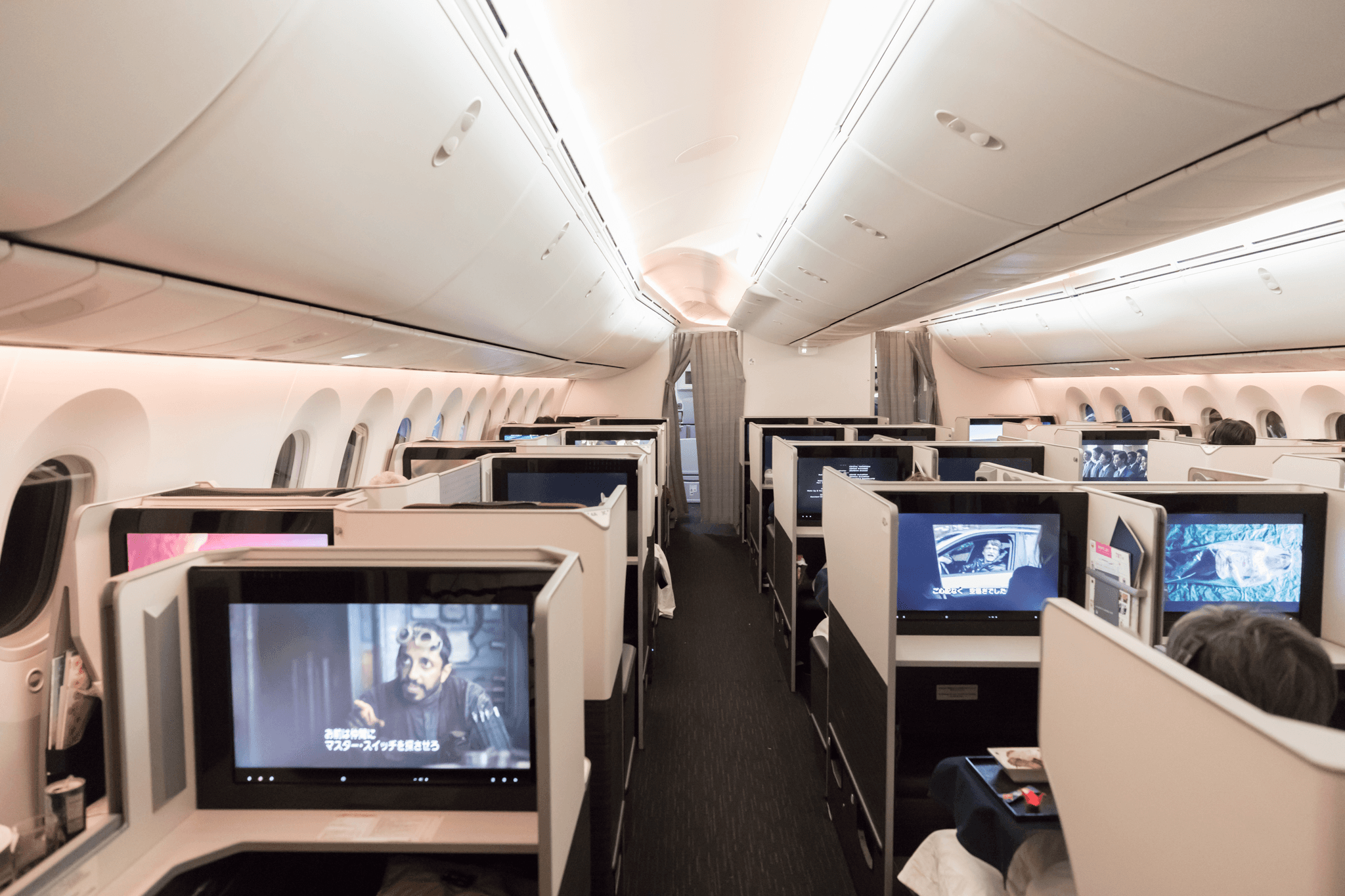
Japan Airlines' Boeing 787-9 Business Class offers the widest seat on the route at 25.5" with exceptional Japanese service, but the narrow window-seat walkway is genuinely claustrophobic. United's 787-10 is cramped by comparison. All three carriers swap aircraft unpredictably—confirm your specific plane 72 hours before departure or you may get downgraded to a narrower product.
TL;DR
Japan Airlines' 787-9 Business Class (seats 7A/7K or 8A/8K) is the gold standard on this route—25.5" width, Airweave bedding, and world-class Japanese cuisine make it worth the premium over ANA and United. ANA's A380 Economy is exceptional with 34" pitch and a 13.3" IFE screen, but Premium Economy on any carrier is barely worth the markup on an 11-hour flight unless you're connecting and need the lounge. Fly the overnight westbound departure (departs SFO evening, arrives HND morning) to maximize sleep and minimize jet lag on arrival. Route-specific gotcha: all three carriers operate multiple aircraft types on this route with wildly different Business Class products—a 787-9 is a world-class experience, but a 787-8 or 777 is significantly worse.
Airlines flying SFO ↔ HND
Japan Airlines operates this route daily with a mix of Boeing 787-9 (premium) and 787-8 (crew rest), typically rotating through HND as a hub. All Nippon Airways (ANA) flies daily with both Boeing 787-9/787-10 and the Airbus A380 (upper deck only on the largest frequencies), offering the most capacity and consistency. United Airlines operates 1–2 daily frequencies with Boeing 787-10 (newer but tighter Business Class than JAL's 787-9) and occasional 777-200ER (outdated reverse-herringbone). JAL and ANA are the consistent daily options; United's schedule is more variable and subject to seasonal adjustments.
Business Class on SFO ↔ HND
Japan Airlines' Boeing 787-9 is the definitive best product on this route: 25.5" width, direct aisle access (C/H seats) or privacy-forward window cocoons (A/K), Airweave mattress, and Michelin-level Japanese cuisine. Avoid rows 11A/11K (no window) and row 12 (adjacent to lavatory). ANA's 787-9 Business is identical in hard product but service is marginally less attentive. United's 787-10 has the same seat width but feels cramped due to suite depth and longer walkways; their 777-200ER uses reverse herringbone (outdated and 20–22" wide). The aircraft lottery is critical: if you don't confirm a 787-9 on JAL or ANA 72 hours before departure, you may be re-accommodated onto a 787-8 or 777, which are materially inferior.
Premium Economy on SFO ↔ HND
JAL and ANA both offer Premium Economy on this route with identical 2-2 configurations and 38" pitch; United operates Premium Plus on 787-10 only. The cabin is genuinely comfortable for 11 hours, but the price premium (typically $800–1,500 over Economy round-trip) is difficult to justify unless you're chasing lounge access or need lie-flat recline for a connection. If you're buying a solo ticket for the privacy or sleeping comfort, Business Class on JAL is only 30–40% more expensive on many fares—Premium Economy sits in an awkward middle ground. Book it only if you have a specific reason (lounge, extra baggage, or seat preference) beyond comfort alone.
Economy on SFO ↔ HND
ANA's A380 Economy is the standout on this route with 34" pitch (2–3 inches above the industry standard), a 13.3" touchscreen (the largest Economy IFE in the world), 6-way adjustable headrest with side wings, and access to the two cabin bars. JAL's 787-9 Economy offers 32" pitch and excellent service but a smaller 10.6" screen. United's 787-10 Economy delivers 32" pitch, good IFE, but the tightest overall cabin atmosphere. ANA's A380 is the clear Economy winner; book it specifically and confirm the aircraft 72 hours out (ANA sometimes swaps 787-9 for lower frequencies, which cuts pitch to 32").
Best for each cabin
Cabin | Winner | Why |
|---|---|---|
Business | Japan Airlines 787-9, seats 7A/7K or 8A/8K | 25.5" width, Airweave bedding, exceptional Japanese cuisine, main cabin privacy sweet spot away from forward galley |
Premium Economy | Japan Airlines or ANA 2-2 configuration | Identical 38" pitch, direct aisle access, but only worth booking if lounge access or seat preference is the priority over cost |
Economy | ANA Airbus A380, window seats rows 35–60 | 34" pitch, 13.3" IFE screen (largest in economy), 6-way headrest with wings, cabin bars, A380 width advantage |
Avoid on this route
Cabin | Avoid | Why |
|---|---|---|
Business | United 787-10 or 777-200ER | 787-10 cramped suite depth and longer walkways; 777-200ER uses reverse herringbone (20–22" width, outdated hard product) |
Business | JAL/ANA row 11 window seats (11A, 11K) | No window despite being priced as window seat; confirmed by multiple reviewers |
Economy | United 787-10 Economy | 32" pitch, confined cabin feel, no standout amenities compared to ANA A380 |
Premium Economy | Any airline if flying solo for comfort alone | Price premium ($800–1,500 round-trip) rarely justified unless lounge access or extra baggage is needed; Business Class on JAL often only 30–40% more |
🌏 Schedule & Jet Lag Reality
The SFO ↔ HND route runs as a daytime eastbound (HND→SFO) and overnight westbound (SFO→HND) operation, with minor variations by carrier.
Westbound to Asia (SFO→HND): All three carriers—Japan Airlines, All Nippon Airways, and United Airlines—depart San Francisco in the late afternoon/early evening (typically 3–6 PM) and arrive in Tokyo the next day around 3–5 PM local time. This is the critical jet lag advantage: you arrive in the early afternoon, check into your hotel by 4–5 PM, and can stay awake through dinner and bedtime, resetting your circadian rhythm by the next morning. First-time Asia visitors should book this schedule without hesitation. Frequent travellers familiar with powering through jet lag may prefer the overnight red-eye feel, but the afternoon arrival is objectively superior for sleep consolidation.
Eastbound to San Francisco (HND→SFO): Departures are typically mid-morning to early afternoon from Tokyo (9 AM–1 PM), with arrivals in San Francisco the same day between 3–7 PM. This schedule is brutal for westbound travel: you arrive in late afternoon, too tired to eat dinner but too early to sleep, landing you in the 10 PM–2 AM insomnia window. Avoid this direction for leisure travel if possible; book business-class-only if you must take this leg, as lie-flat sleep is your only salvation.
Carrier-specific schedules: Japan Airlines and ANA maintain consistent afternoon SFO departures year-round. United's schedule is less predictable and sometimes shifts to evening departures depending on seasonal demand. Check the specific flight number: JAL 60/61 and ANA 175/176 are your reference departures. Both leave SFO around 4–5 PM and arrive HND around 4–5 PM next day.
Verdict: Book westbound (SFO→HND) for any Asia trip, period. The afternoon arrival is the single biggest jet lag win on this route. If you must go eastbound, arrive on a Friday if possible and take the full weekend to adjust.
🏆 Cabin Class Verdict
Business Class: Japan Airlines wins decisively with its 1-2-1 staggered herringbone configuration in the Boeing 787-9 and 777-300ER, offering true privacy and direct-aisle access from every seat. ANA's newer A380 upper-deck Business (the 1-2-1 layout in rows 1–11) matches JAL's privacy and adds shower facilities, but ANA's older 777s and 787s feature the slightly tighter 2-3-2 forward-facing layout. United operates 787-10s with a 1-2-1 configuration but with inferior mattress padding and smaller IFE screens. For this route, JAL 777-300ER or 787-9 Business Class is the gold standard—world-class privacy, Airweave bedding, exceptional Japanese haute cuisine, and impeccable service. Price is typically $4,500–$6,500 cash; book JAL if available at your fare level. ANA's A380 is close second for the shower amenity alone. United is the laggard: adequate but generic, with the weakest meal service of the three.
Premium Economy: Japan Airlines and ANA both offer genuine Premium Economy on SFO–HND with direct-aisle seating, 38-inch pitch, noise-cancelling headsets, and amenity kits. United's "Premium Plus" on the 787-10 is a cosmetic upgrade—same economy seat with extra legroom but no cabin separation. The verdict is cautiously positive for the $800–$1,200 premium on an 11-hour flight: the seat width, noise isolation, and crew attention (dedicated service, first meal service) justify the uplift if booked 2–4 weeks out at discounted rates. However, if Business Class is within $2,000, book Business—the lie-flat sleep transforms the flight. If Business is $5,000+ and Premium is $1,200, Premium Economy represents genuine value, though it remains a "compressed long-haul" experience. ANA's A380 Premium Economy is the most spacious on the route and the most comfortable chair for the price.
Economy Class: ANA's A380 Economy on selected SFO–HND flights offers the most generous pitch on the route: 34 inches, plus the world's largest Economy IFE screen (13.3 inches), 6-way adjustable headrests with side wings, and bar areas for stretching. JAL's 777 Economy offers 32–33 inches depending on the aircraft variant; United's 787-10 Economy is 32 inches. ANA Economy is objectively the best product for long-haul comfort, and if you're flying economy, specifically request the A380 flight. Meal service is comparable across all three (JAL slightly edges out ANA with regional Japanese dishes), but ANA's A380 bar service and in-cabin stretch space make the 11-hour transit significantly more bearable. United Economy is the weakest: 32-inch pitch, smaller IFE, and minimal meal differentiation.
🛂 Hub & Onward Connections
Tokyo Haneda as a connecting hub: Minimum connection time for international-to-international transfers at HND is 90 minutes for same-alliance carriers, 120+ minutes for interline connections. Haneda has three terminals; ensure your connection is not a terminal change (check your itinerary). Star Alliance and oneworld have dedicated transfer corridors; SkyTeam transfers require more walking.
Lounge access & shower facilities: Business Class passengers on JAL have access to the JAL First Class Lounge (Terminal 1)—the most prestigious lounge at Haneda, offering hot meals, showers, and direct airport-lounge transfers. ANA Business passengers use the ANA Lounge or ANA Suite Lounge (both terminals 1–3)—shower facilities are available on a first-come, first-served basis; expect a 30–60 minute wait during peak hours. JAL's lounge shower access is more reliable than ANA's. United Business passengers use the United Club at Terminal 1 (basic facility with limited shower availability). For arriving Business passengers continuing onward, allocate 30 minutes for shower, 20 for grooming, and 30 for eating—total 80 minutes minimum before your next flight. Book your shower slot immediately upon arriving at the lounge.
Onward Asia connections: HND is the largest hub in Asia and offers 90-minute connections to most major Asian cities (Seoul ICN, Osaka KIX, Bangkok BKK, Singapore SIN, Hong Kong HKG). Star Alliance (ANA, United) has the strongest onward network in East Asia—daily flights to 15+ regional destinations. JAL (oneworld) dominates domestic Japan and offers strong connections to Southeast Asia. SkyTeam is weakest at Haneda. If you're continuing to a second city, book ANA or JAL for the most generous connection timing and frequent departures.
💳 Award Booking Sweet Spot
Star Alliance (Aeroplan, United MileagePlus, ANA Mileage Club): SFO–HND Business Class redemptions typically cost 70,000–85,000 miles (Aeroplan), 80,000–100,000 miles (MileagePlus), or 75,000–90,000 miles (ANA Mileage Club). Aeroplan offers the best dynamic pricing for this route—watch for 70,000-mile sweet spots on JAL flights in low-demand months (January, April, September). ANA Mileage Club pricing is fixed and reasonable (75,000 miles round-trip JAL Business), but availability is often tight; book 10–11 months in advance. MileagePlus is the worst value at 100,000+ miles for premium transports but occasionally releases 80,000-mile saver rates.
Oneworld (AAdvantage, Avios, JAL Mileage Bank): JAL Mileage Bank is the hidden gem on this route. Round-trip SFO–HND Business Class costs 120,000 miles year-round on JAL metal—a fixed rate that undercuts both Aeroplan and MileagePlus by 15–20%. AAdvantage (American Airlines) prices at 90,000–120,000 miles depending on the airline and season; availability is poor since American has no direct service and awards are limited. Avios (British Airways) is not useful for this route; Avios redemptions to Asia on oneworld partner flights are prohibitively expensive (120,000+ Avios).
SkyTeam (Flying Blue, Virgin Atlantic for Delta): Avoid this route on SkyTeam programs. Flying Blue redemptions are 110,000–140,000 miles for Business Class on Air France or KLM connecting partners (not competitive). Virgin Atlantic miles are not useful; Delta has no direct transpacific service from SFO.
Verdict – Best Value Program: ANA Mileage Club at 75,000 miles round-trip is the sweet spot, followed immediately by Aeroplan at 70,000–80,000 miles during low-season windows. Both offer fixed pricing that beats the market significantly compared to cash fares of $4,500–$7,500. JAL Mileage Bank at 120,000 miles is not a sweet spot in absolute terms but is the most accessible if you lack Aeroplan or MileagePlus balances; book 10 months in advance for availability. Never book this route on MileagePlus, AAdvantage, or Flying Blue unless you have miles expiring.
Partner award sweet spot: If you have Flying Blue miles, transfer to ANA (Mileage Club partnership) at a 1.5:1 ratio to unlock ANA's 75,000-mile rate—this effectively costs 112,500 Flying Blue miles, which is better value than Flying Blue's own SkyTeam partners. If you hold Amex MR points, transfer to Aeroplan for the 70,000-mile low-season rate—one of the best point-to-premium-cabin conversions in the travel industry.
What is the best airline for SFO ↔ HND in Business Class?
Japan Airlines Boeing 787-9, seats 7A/7K (first row of main cabin, maximum privacy) or 8A/8K (equally private, sweet spot). JAL's 25.5" width, Airweave mattress, and Michelin-level Japanese cuisine are unmatched on this route. Confirm the aircraft 72 hours before departure—JAL sometimes operates 787-8 (narrower, crew rest) or older 777 (reverse herringbone) on this route.
How long is the flight from San Francisco to Tokyo Haneda?
~11 hours block time. Westbound (SFO → HND) is typically 1–2 hours longer than eastbound due to jet stream headwinds. Book an evening departure (departs SFO 6–9pm, arrives HND 7–9am next day) to align sleep with overnight and minimize jet lag on arrival.
Which airline has the best Economy on SFO ↔ HND?
ANA Airbus A380 with 34" pitch, 13.3" IFE screen (largest Economy screen in the world), 6-way adjustable headrest with side wings, and access to two cabin bars. Window seats (A or K) in rows 35–60 are optimal. Confirm A380 operation 72 hours out; ANA occasionally substitutes 787-9 on lower-frequency dates.
Is Premium Economy worth it on SFO ↔ HND?
No, unless lounge access or seat preference is the primary driver. The typical premium ($800–1,500 round-trip over Economy) is difficult to justify for an 11-hour flight when JAL's Business Class on 787-9 is often only 30–40% more expensive on sales. If you need extra recline and priority boarding, book it. If you're optimizing for value and sleep, either book Economy on ANA A380 or stretch to Business on JAL.
What is the aircraft lottery on SFO ↔ HND?
All three carriers operate multiple aircraft on this route with vastly different hard products. JAL rotates 787-9 (premium), 787-8 (crew rest), and older 777. ANA uses 787-9, 787-10, and A380 depending on frequency. United operates 787-10 and 777-200ER. A 787-9 Business Class is world-class; a 787-8 or 777 is significantly cramped and less modern. Confirm your specific aircraft 72 hours before departure or risk re-accommodation to an inferior product.
Which seats should solos book on JAL/ANA Business Class?
Windows 7A/7K or 8A/8K for maximum privacy and the world-class cocoon experience, if you can tolerate the narrow walkway (tight for passengers over 6'). If the narrow access worries you, aisles 7C/7H give direct access with decent privacy and better crew interaction without the squeeze.
What is the route-specific gotcha?
Aircraft swaps are common and material. A 787-9 Business Class is transcendent; a 787-8 or 777 is significantly worse (narrower, older IFE, less modern). All three carriers occasionally re-accommodate passengers at check-in or gate. Always confirm your aircraft 72 hours before departure via airline website or call—if it's not the aircraft you booked, contact Cabin.coach's partner airlines for re-accommodation options before reaching the airport.
sfo, hnd, san francisco, tokyo haneda, route guide, transpacific_long, 2026, business class, premium economy, economy, best airlines, boeing 787, airbus a380, japan airlines, ana, united airlines