Best Airlines from London to Johannesburg (2026)
LHR ↔ JNB
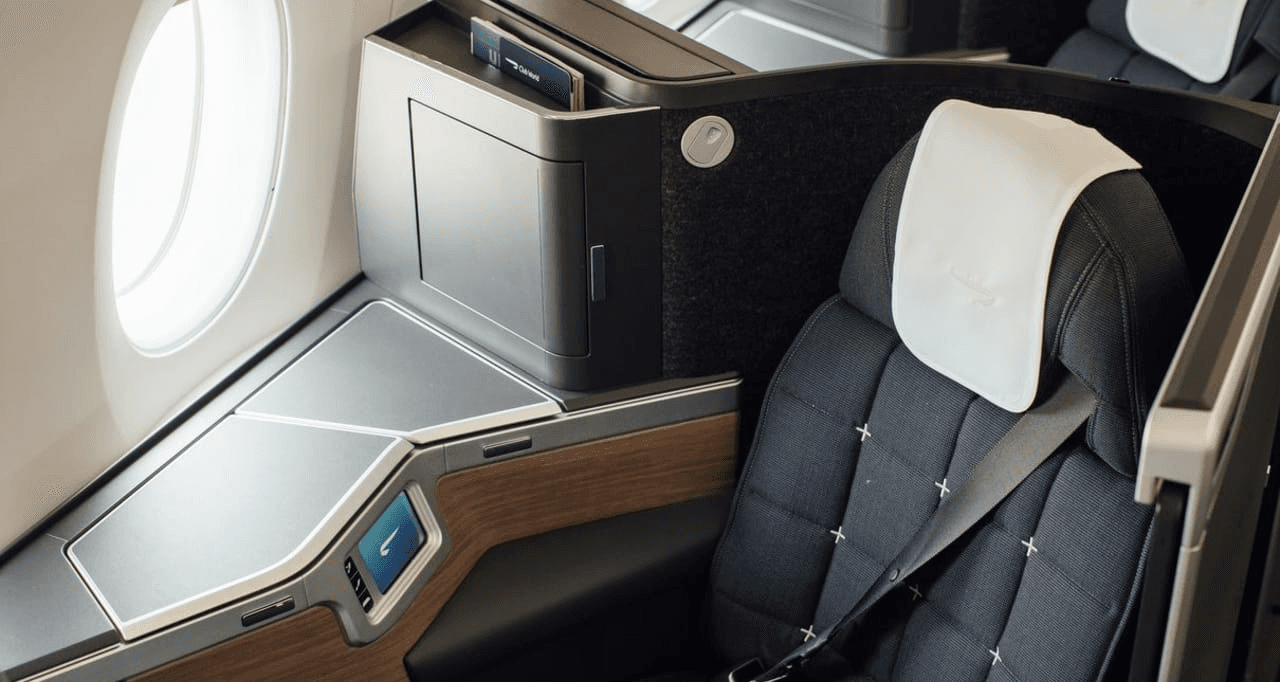
British Airways Club Suite on the A350 dominates Business Class on this 11-hour overnight run, offering enclosed suites and direct aisle access that make the long haul genuinely restful. Virgin Atlantic Upper Class is a solid alternative but lacks the privacy edge. Avoid BA's older Club World on the 777 if you value sleep — the face-to-face seating and galley-opposite seats turn the flight into a social gauntlet.
TL;DR
BA Club Suite (A350) is the uncontested Business Class winner: enclosed suites with doors, direct aisle access, and mid-cabin window positions deliver the best sleep potential on an 11-hour overnight flight. In Economy, BA's A350 forward cabin edges Virgin Atlantic's A330 for quieter service and better views, though both offer competitive pitch. Premium Economy is genuinely worth considering on this distance — BA World Traveller Plus adds 8 inches of pitch and a self-contained cabin for typically £500–800 more than Economy, which justifies the spend on a redeye. Book overnight departures from London (typically 21:00–23:00) to align sleep with darkness over Africa and arrive refreshed mid-morning in JNB. The route-specific gotcha: BA occasionally swaps the A350 for a 777-300ER on this sector during maintenance windows, significantly degrading Business Class experience — always verify aircraft at booking and 72 hours prior.
Airlines flying LHR ↔ JNB
British Airways operates daily LHR–JNB flights, primarily using the A350-1000 (preferred for Club Suite with enclosed suites) and occasionally the 777-300ER (older, face-to-face Club World). Virgin Atlantic operates 5–6 times weekly with the A330-900neo, featuring Upper Class with direct-aisle suites and Premium cabin seating. Both carriers treat this as a premium route with strong business traffic and overnight scheduling.
Business Class on LHR ↔ JNB
BA Club Suite on the A350-1000 is the clear winner: fully enclosed suites with closing doors, direct aisle access, 6ft 8in flat beds, and superior noise isolation make it the gold standard for sleeping on an 11-hour redeye. Aim for window suites (rows 1–4 on the A350) for solo travelers, or central pairs for couples; avoid first/last rows adjacent to galleys and lavatories. Virgin Atlantic Upper Class on the A330-900neo is competitive — direct-aisle seats with 6ft 6in beds — but the cabin is more open-plan and lacks door privacy. BA's older Club World (777-300ER) is to be actively avoided on this route: face-to-face seating, seats directly opposite galleys, and reduced recline in rear rows make 11 hours genuinely uncomfortable. If BA shows a 777 at booking, switch to Virgin Atlantic or wait for A350 availability.
Premium Economy on LHR ↔ JNB
Both BA (World Traveller Plus on A350/777) and Virgin Atlantic (Premium) offer Premium Economy on this route. BA's cabin is smaller and more self-contained with 38in pitch and direct-aisle access on the A350; Virgin Atlantic's Premium offers 38in pitch on the A330-900neo but with more through-traffic. For an 11-hour overnight flight, Premium Economy is genuinely worth the typical £500–1000 uplift over Economy: the pitch gain (8 inches vs standard Economy), quieter cabin positioning, and improved meal service meaningfully reduce fatigue on a redeye. On this specific route, BA's World Traveller Plus edges ahead due to the A350's superior cabin isolation and faster, less-interrupted service cycles.
Economy on LHR ↔ JNB
BA's A350 Economy offers the best experience: forward cabin windows away from galley/lavatory clusters, 31in pitch, and quieter service rhythms due to smaller cabin volumes. Virgin Atlantic's A330-900neo Economy is competitive with 32in pitch and excellent IFE, but rear cabin seats suffer galley and lavatory proximity on longer flights. BA's 777-300ER Economy, when deployed, offers only 31in pitch with reduced recline in rear rows and heavier galley traffic — avoid if possible. For a 11-hour flight, IFE and WiFi matter: BA's A350 has excellent seatback IFE and paid WiFi; Virgin Atlantic's A330-900neo offers competitive entertainment but WiFi quality can be patchy over Africa. Choose BA Economy if available on the A350 for sleep potential; otherwise, Virgin Atlantic A330 offers superior pitch and entertainment value.
Best for each cabin
Cabin | Winner | Why |
|---|---|---|
Business | British Airways Club Suite (A350-1000) | Enclosed suites with doors, direct aisle access, 6ft 8in bed, mid-cabin window positions for optimal sleep on 11-hour overnight flight |
Premium Economy | British Airways World Traveller Plus (A350) | Self-contained cabin, 38in pitch, A350 quieter service cycles, faster boarding/deplaning vs Virgin Atlantic Premium |
Economy | British Airways Economy (A350) | Forward/mid-cabin windows away from lavatory blocks, 31in pitch, quieter cabin volumes, superior seatback IFE |
Avoid on this route
Cabin | Avoid | Why |
|---|---|---|
Business | British Airways Club World (777-300ER) | Face-to-face seating, seats opposite galleys, rear-cabin reduced recline, poor sleep potential on 11-hour redeye — switch to Virgin Atlantic Upper Class if BA shows 777 |
Economy | British Airways Economy (777-300ER) | 31in pitch with restricted rear-cabin recline, heavy galley/lavatory traffic, last rows near service blocks |
🏆 The Big Three (Plus Turkish) Verdict
LHR ↔ JNB is rarely flown direct; instead, you'll route via one of four hubs: Dubai (Emirates), Doha (Qatar Airways), Abu Dhabi (Etihad), or Istanbul (Turkish Airlines). BA and Virgin Atlantic do not operate this route competitively on a direct basis.
The verdict: Qatar Airways QSuite is the clear winner for Business Class overall. The direct-aisle access, door-closing suites, and consistent onboard product outpace Emirates' older First/Business layouts and Etihad's refreshed-but-still-transitional cabin. However, Emirates wins decisively on ground experience (Al Maktoum airport lounge superiority, A380 routing on some flights), and Etihad's new Business Studio is sharper than legacy Club World.
Solo travellers wanting privacy: Qatar QSuite. Window suites with closing doors and no face-to-face seating make this the gold standard.
Couples wanting paired seats: Emirates or Turkish Airlines 777. Both offer centre-pair seats in Business with excellent privacy; Qatar's QSuite is also superb, but requires booking suites 1A/1L (window pairs) deliberately.
Budget-conscious travellers wanting the best cash fare: Turkish Airlines, typically 15–25% cheaper than Qatar or Emirates for equivalent Business fares, with a respectable 777-300ER or A350 product and Istanbul stopover appeal.
🛂 Hub Stopover Intelligence
Strongest hub for a long stopover: Dubai (DXB) offers the most tourist appeal, reliable ground services, and straightforward visa-on-arrival for most nationalities. An 8–12 hour stopover with hotel voucher is genuinely worth chasing; you can sleep, shower, and see the city.
Weakest hub: Doha (DOH). While modern, it's less tourist-friendly, offers fewer hotel options within walking distance, and has a smaller lounge network. A 6-hour layover in DOH feels rushed; an 8-hour layover still doesn't reward exploration.
Tolerable vs punishing connection times:
DXB: 3 hours is tight but doable on a straightforward connection; 5+ hours is comfortable; 8+ hours is a genuine stopover opportunity.
DOH: 2.5 hours is a sprint (risky if checked luggage); 4 hours is tolerable; 6+ hours becomes worthwhile.
AUH: 3 hours is workable; 5+ hours is pleasant; less tourist infrastructure than DXB.
IST: 3 hours is tight; 5–6 hours is ideal for a quick Old City visit; 10+ hours is a strong stopover option.
Complimentary hotel vouchers: Emirates offers hotel rooms for layovers over 8 hours; Turkish Airlines offers them for layovers over 12 hours on long-haul itineraries. Qatar Airways provides hotel access from 6 hours but typically requires a paid upgrade or Business Class ticket.
🌙 Schedule & Jet Lag
Schedule that minimises jet lag: An early-morning departure from London (06:00–07:00) with an evening arrival in Johannesburg (20:00–22:00 local time) is ideal. The hub stopover acts as a useful body-clock reset — you sleep during the second flight leg when darkness falls on the Africa run, and arrive refreshed for local evening time. This is the rarest schedule but the strongest for sleep and acclimatization.
Schedule to actively avoid: A mid-afternoon London departure (14:00–16:00) into a late-night Johannesburg arrival (23:00+) compounds jet lag. You miss the first-leg sleep window, arrive exhausted at midnight, and spend the next 2–3 days fighting circadian misalignment. Avoid this if you're continuing on to safari lodges or business meetings the next morning.
Does the hub stopover help or hinder? It depends on schedule. A natural break (arriving hub mid-morning, departing mid-evening) genuinely helps; you can sleep in the airport lounge, shower, reset your watch. A misaligned stopover (arriving hub at 04:00, departing at 07:00) simply compounds fatigue. Most routing via the Gulf simply doubles travel time rather than improving sleep quality — the Johannesburg arrival is still in the middle of your night, regardless of hub timing.
First-time travellers: Opt for an early London departure if possible. The +2 hour timezone difference (JNB is UTC+2) is manageable, and a daytime arrival means you can walk around and self-regulate to local time by evening.
Frequent travellers: The hub is a non-event. You care more about aircraft type (QSuite vs Club World), route timing, and connection reliability than stopover appeal.
Travellers continuing beyond JNB (e.g., to safari lodges): Chase an arrival in the 18:00–21:00 window if possible. This allows a same-day onward connection or hotel overnight before an early-morning lodge drive, rather than midnight arrival + wasted hotel night.
💳 Award Booking Sweet Spot
Typical award pricing for LHR ↔ JNB Business Class:
Qatar Airways (Avios): 200,000–240,000 Avios one-way for QSuite via the DOH hub is the reigning sweet spot in award travel. This remains superior value compared to cash fares (often £4,000–6,000) and outpaces most other award programs. Avios can be transferred from Amex or earned via BA/Iberia flying. This is the single strongest value proposition on this route.
Emirates (Skywards): 170,000–220,000 Skywards miles one-way depending on cabin tier (Business Lite vs Business). Skywards is notoriously hard to accumulate and expensive to top-up; only book if you have significant miles balance already. Lower absolute ask than Qatar, but harder to acquire the miles.
Etihad (Etihad Guest): 165,000–210,000 Etihad Guest miles one-way. Etihad miles are similarly difficult to accumulate; transferable partners are limited. Nominally cheaper than Qatar, but less achievable for most Western-based travellers.
Turkish Airlines (Miles&Smiles): 200,000–250,000 miles one-way depending on season. Turkish miles are moderately easier to acquire (Amex transfer, hotel stays, car rentals); marginally less competitive than Avios but reasonable if you hold Turkish partnerships.
The verdict: Qatar Airways via British Airways Avios is the strongest-value programme on LHR ↔ JNB. A single Avios transfer partner (Amex Platinum Reserve, earning 1.5 points per £1 spent) combines with a 200k–240k Avios ask to represent genuine value. The QSuite product is superior to all competitors, and Avios are easier to accumulate for UK-based travellers than Skywards or Etihad Guest miles. If you do not hold Avios, Emirates Skywards or Turkish Miles&Smiles are secondary options, but neither approaches the Avios advantage for this specific route.
What is the best airline for LHR ↔ JNB in Business Class?
British Airways Club Suite on the A350-1000. Enclosed suites with closing doors, direct aisle access, and mid-cabin window positioning deliver the best sleep on an 11-hour overnight flight. Avoid Club World on the 777-300ER.
How long is the flight from London to Johannesburg?
Block time is ~11 hours. On typical overnight departures from LHR (21:00–23:00), you arrive JNB mid-morning local time (08:00–10:00), allowing immediate onward connection or hotel check-in without heavy jetlag if you sleep well — making Business Class sleep quality critical on this specific routing.
Which airline has the best Economy on LHR ↔ JNB?
British Airways A350 Economy, if available. 31in pitch, forward-cabin window seats away from lavatory clusters, and quieter service cycles on the smaller A350 cabin make sleep feasible on an 11-hour redeye. Virgin Atlantic A330-900neo offers competitive 32in pitch and superior IFE but has greater through-traffic near rear galleys.
Is Premium Economy worth it on LHR ↔ JNB?
Yes, on this 11-hour overnight route. The typical £500–1000 uplift buys you 8 additional inches of pitch (38in vs 30in), a self-contained cabin with fewer service interruptions, improved meal service, and quieter overnight sleep environment. On redeye transits where sleep quality directly impacts connection safety and next-day productivity, Premium Economy is more justified here than on many shorter long-haul routes.
lhr, jnb, london, johannesburg, route guide, europe_meaf, 2026, business class, premium economy, economy, best airlines, club suite, upper class