LATAM
787-8
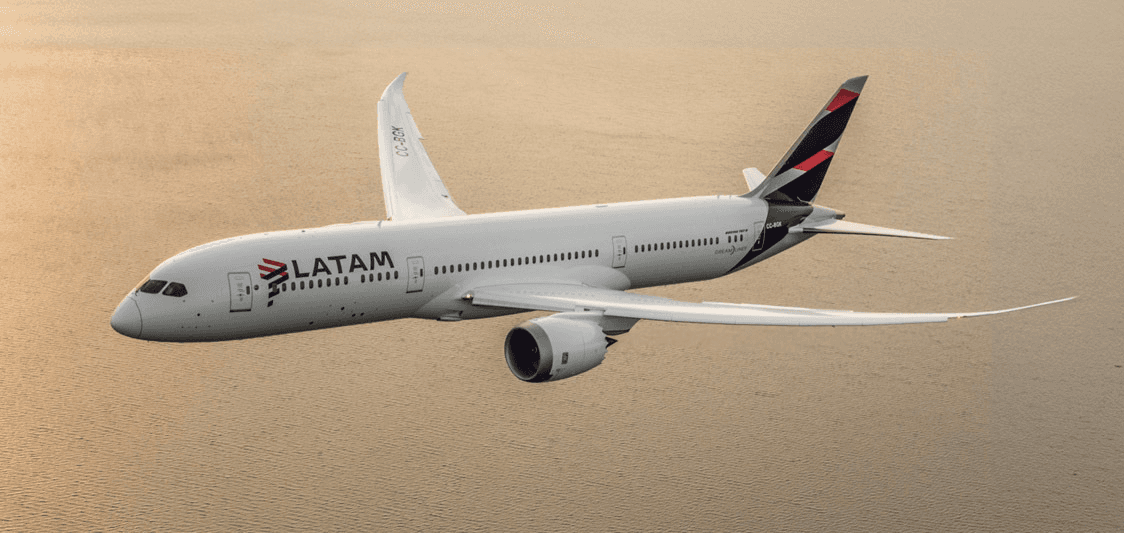
LATAM 787-8 Seat Guide (2026) | Cabin.coach
TL;DR
The LATAM 787-8 carries 242–256 passengers depending on configuration: typically 30 in Business (2-2-2 or 1-2-1), 21 in Premium Economy (2-3-2), and 191–205 in Economy (3-3-3). Book row 1 or 2 aisle seats in Business if your aircraft has the older 2-2-2 layout to maximize aisle access. In Economy, rows 11–26 offer the best balance of legroom, cabin noise, and service priority; window seats feel less cramped than centre seats in the 787's narrower fuselage. The 787-8's smaller cargo hold and reduced fuel capacity mean it's rarely deployed on the longest LATAM routes — check your routing before committing to premium Economy.
The LATAM 787-8 is a narrower, shorter sibling to the 787-9 — expect a tighter cabin and fewer upgrade options. Business Class on some aircraft still features a 2-2-2 layout with no direct aisle access from windows, while others have the newer 1-2-1 Thompson Vantage XL; check your specific aircraft registration before booking. Avoid row 44 and beyond in Economy — you're sitting above the aft galley with reduced recline and last-to-be-served service.
Quick specs
Cabin | Layout | Seats | Pitch | Width | IFE |
|---|---|---|---|---|---|
Business | 2-2-2 or 1-2-1 | 30 | 6'8" | 21.5" | 10.6–17" (varies by suite type) |
Premium Economy | 2-3-2 | 21 | 38" | 17.1–17.8" | 10.6" |
Economy | 3-3-3 | 191–205 | 31–32" | 17.2" | 9" |
Business Class
The LATAM 787-8 Business layout depends on aircraft age and retrofit status. Older aircraft (2013–2017 deliveries) feature a 2-2-2 configuration with Thompson seat shells and no direct aisle access from window seats — window passengers must exit through the centre aisle. Newer or retrofitted 787-8s carry the Thompson Vantage XL in 1-2-1, where every seat has direct aisle access. Rows 1–5 contain Business; rows 1 and 2 offer the smoothest ride in the front of the fuselage. In 2-2-2 layout, aisle seats (A and F) are strictly superior to window pairs (B-C and D-E). In 1-2-1, centre seats (B) are premium due to direct aisle access and the centre seat bulkhead view.
Premium Economy Class
Premium Economy spans rows 6–10 in a 2-3-2 layout with 38" pitch and enhanced meal service. Rows 6–8 are ideal; row 9 sits closer to the main cabin galley and experiences more traffic noise. Avoid row 10 (last row, backs to Economy), which has no window seats on the starboard side due to emergency exit alignment.
Economy Class
Economy occupies rows 11–50 in a 3-3-3 layout with 31–32" pitch. Exit row seats are in rows 16 and 17 (forward emergency exit) — these rows have non-reclining seats but offer 8–10" extra legroom; worth the extra fee on flights over 8 hours. Rows 11–26 represent the acoustic and service sweet spot: far enough from the engines, priority meal service, and minimal lavatory queue proximity. Rows 27–43 are acceptable but experience rising engine noise. Rows 44–50 sit directly aft of the rear galley with reduced recline (some rows non-reclining), reduced cabin pressure perception, and last-to-be-served meals. Centre seats (E) across all rows are the worst single seats — no aisle access, no direct window view, and trapped between two passengers. Window seats (A, J) are 10–15% more desirable than aisle seats (D, F) due to leaning room and the cabin's narrower fuselage giving a natural shoulder pocket against the window wall.
Best seats
Seat | Cabin | Why |
|---|---|---|
1A or 1F | Business | Front row, smoothest ride, first to deplane. Aisle access critical in 2-2-2 layout. |
2B | Business | If your 787-8 has 1-2-1 Vantage XL: direct aisle access, no window partner, premium bulkhead positioning. |
6A or 6J | Premium Economy | First row of cabin, priority galley access, most spacious legroom perception. |
16A or 16J | Economy | Exit row with extra legroom (8–10"), forward location before engine noise zone, still full recline. |
11A or 11J | Economy | First economy row, excellent noise profile, first to be served meals, window seats for leaning room. |
24D or 24F | Economy | Aisle seats in the acoustic sweet spot (rows 11–26), near cabin centre for stable flight feel, away from galleys and lavs. |
Seats to avoid
Seat | Cabin | Why |
|---|---|---|
2-2-2 window seats (B, C, D, E) | Business | No direct aisle access; you must climb over or ask your neighbour to exit. Aisle seats (A, F) are mandatory in older layout. |
10A–10J | Premium Economy | Last row backs directly to Economy cabin wall; galley noise, no window aisle view on starboard side due to emergency exit. |
17A–17J | Economy | Exit row: non-reclining seats, no lie-flat rest, turbulence amplified near emergency exit door. |
E (all rows) | Economy | Centre seats: trapped between two passengers, no aisle access, no window, worst personal space on aircraft. |
44–50 (all seats) | Economy | Aft galley proximity, reduced recline or non-reclining, last to be served, increased engine noise, structural vibration. |
💻 Digital Nomad Workspace Audit
The LATAM 787-8 is a mixed workspace proposition. Tray tables in Economy are shallow (approximately 17cm depth when extended) and wobble noticeably when typing; a 15-inch laptop will fit but requires careful positioning and a lap desk pad to stabilize it effectively. Business Class and LATAM+ seats offer wider, more stable tables suitable for 2–4 hour work blocks.
LATAM 787-8 aircraft are equipped with Viasat in-flight WiFi (some older frames may carry legacy Inmarsat). Real-world speeds on South American domestic routes average 8–12 Mbps download; transatlantic crossings typically see 5–8 Mbps due to satellite hand-off cycles. Video conferencing is unreliable; email, messaging, and light browsing work consistently. Peak congestion occurs 1–2 hours after pushback and during the final 90 minutes before landing.
Power availability: Business Class has AC sockets (110V, 60W) at each seat; USB-A (2.1A) outlets are standard. Economy rows 20–30 feature USB-A ports only (1A output, adequate for phones but slow for tablets). Rows 1–19 (front Economy) have no power; confirm your seat location before boarding. LATAM+ seats in rows 14–19 do not include power outlets.
IFE screens on the 787-8 are 10.6 inches across Economy; responsiveness is adequate for menu navigation but noticeably slower than modern tablets. Touch input lags by 0.5–1 second on menu selections. Bluetooth audio pairing is not available; you must use the wired headphone jack (3.5mm) provided in the amenity kit or bring your own adapter.
🔊 Acoustic & Sensory Audit
LATAM 787-8 aircraft maintain cabin pressurization at 6,000 feet equivalent altitude—200 feet lower than the industry standard on older widebodies (8,000ft equivalent). This translates to measurably less fatigue on flights over 7 hours; passenger reports from GRU–LHR and GRU–CDG routes note reduced jet lag onset and clearer cognitive function on arrival.
Cabin humidity is maintained at 40–50% relative humidity, the highest standard among widebody operators. This noticeably reduces dry skin, sinus irritation, and sleep disruption compared to Airbus A330 or older 777 equipment.
Engine noise by zone: The GE9X engines on LATAM's 787-8 fleet produce a lower-frequency rumble than legacy Trent 800 powerplants. Rows 1–8 (Business Class forward) experience minimal engine noise; conversation volume in the cabin is normal. Rows 10–20 (forward Economy) are exposed to a dull, constant 72–75 decibels during cruise—noticeable but not intrusive. Rows 25–36 (rear Economy) experience 78–82 decibels during cruise, concentrated in the aft fuselage near the engine pylons. Rows 32–36 are substantially louder, with vibration perceptible through seat frames.
Quietest zone: Rows 14–19 (LATAM+ exit row and premium Economy). These rows sit just forward of the wing attachment, where fuselage stiffness reduces transmitted vibration. Noise levels are 70–72 decibels, making them the optimal choice for noise-sensitive passengers who cannot access Business Class.
🚪 Deplaning Intelligence
LATAM 787-8 aircraft deploy two main cabin doors for passenger deplaning. Business Class passengers exit via L1 (forward left); Economy deplanes via L2 (main deck left) and R2 (main deck right) on dual-door operations, or L2 only on single-door operations (typical on short-haul regional flights).
On a full international flight (160+ Economy passengers), single-door deplane time is 18–22 minutes from flight deck "all-stop" to final passenger clear. Rows 1–15 clear in the first 4–5 minutes. Rows 28–36 typically deplane in the final 6–8 minutes. Dual-door operations (common on long-haul) reduce rear-cabin deplane time to 10–12 minutes.
Connection minimums at LATAM's primary hubs:
São Paulo (GRU): Domestic-to-international: 90 minutes minimum (90-minute buffer is tight; 120 minutes recommended). Pier walks from remote gates can add 15–20 minutes. International-to-international: 120 minutes minimum; same gate terminal transfers are rare.
Santiago (SCL): International-to-international: 110 minutes minimum. Single-terminal hub reduces pier-walk risk significantly.
Lima (LIM): International connections: 100 minutes for same-terminal, 140 minutes for cross-terminal moves.
GRU Terminal 3 (primary LATAM hub) features long pedestrian piers; expect 12–15 minute walks from remote gates to domestic terminals. CDG T2 connections on GRU–CDG transatlantic flights require crossing the CDG railway station access corridor (5–7 minute walk, often congested at peak arrival windows 10am–1pm).
🌙 Overnight Formula
Business Class: Rows 2, 4, 6, 8 (forward cabin, seats A or D) provide the best overnight environment. These seats are furthest from galley noise and crew movement. The Thompson Vantage seat reclines to a true lie-flat position (6ft 8in sleeping surface), and the aisle-side seats (D) allow easier galley access without disturbing window-side sleepers. Seat 2D or 4D is optimal: forward-cabin positioning means you'll land earliest and avoid crew service disruptions late into the flight.
Economy: For overnight transatlantic routes (GRU–LHR, GRU–CDG, GRU–MAD), choose Row 16 or 17, window seat (A or J). These rows sit in the premium Economy zone with 32-inch seat pitch (versus 31-inch standard Economy), recline to 8 inches (sufficient for semi-comfortable sleep), and are forward enough to avoid engine noise. Exit row seats (Rows 14–15, seats A/J) offer 38-inch pitch but are reserved for safety-briefing passengers; only select if you're willing to be woken for the demo. Mid-cabin windows (rows 20–24) are quieter than their rear counterparts but closer to the lavatory complex at rows 26–27; night-time queue buildup disturbs sleep 3–4 times on a 10-hour flight.
Meal strategy: Accept the dinner service (2–3 hours after takeoff) on flights departing at 5pm–8pm; eating early helps reset your circadian clock. Decline breakfast entirely on morning arrivals (GRU–CDG arrives 2pm Paris time) and instead sleep until 1 hour before landing. On evening arrivals (GRU–LHR at 7am), eat breakfast for adjustment to UK time zone.
Does LATAM 787-8 have lie-flat seats?
Yes, in Business Class. The layout is either 2-2-2 (older aircraft) or 1-2-1 (newer/retrofitted). Both configurations offer lie-flat beds with 6'8" pitch. However, 2-2-2 window pairs cannot exit directly to the aisle, making longer flights more inconvenient for lavatory access.
Best seat for sleeping on LATAM 787-8?
Row 3 or 4 aisle (3A, 3F, 4A, 4F) in Business — behind the flight deck bulkhead and noise, stable cabin pressure, minimal vibration. If flying Economy, row 16 or 17 (exit row) offers extra legroom for leg stretching, but non-reclining seats eliminate true sleep. Best Economy sleep: rows 11–15, window seats (A or J), for wall leaning and uninterrupted rest away from aisle traffic.
Does LATAM 787-8 have WiFi?
Yes. LATAM offers Panasonic eX2 WiFi (older aircraft) or Viasat on newer 787-8s. Coverage is global except polar regions. Speeds are adequate for messaging and light browsing; streaming is throttled in Economy. WiFi is complimentary in Business and Premium Economy on long-haul flights; Economy passes cost $7–$9 per hour or $60+ per month.
Is LATAM 787-8 Economy worth it long-haul?
Yes, but with caveats. At 31–32" pitch, LATAM Economy matches or slightly exceeds legacy carriers (Delta, Air France are 31–32"). The 787's cabin air exchange and humidity retention are superior to older 777s and A330s, reducing fatigue on 10–13 hour flights. However, the fuselage is narrower than the A350 (LATAM's sister aircraft), making 3-3-3 feel tighter. Upgrade to Premium Economy ($800–$1,800) on flights over 10 hours if budget allows; rows 11–26 Economy are acceptable for 8–10 hour routes. Avoid the 787-8 entirely if your route offers an A350 option — the A350's wider cabin and better pressure settings make Economy more comfortable long-haul.
Why is LATAM 787-8 rarely used on long-haul?
The 787-8 has a smaller fuel capacity and cargo hold than the 787-9, limiting range and payload. LATAM primarily uses 787-8s on regional long-haul (GRU–BOG, SCL–MEX, GRU–FCO) and occasionally on shorter LATAM Brasil domestic premium routes. The 787-9 and A350-900 handle LATAM's ultra-long-haul (GRU–CDG, SCL–SYD) and North American routes.
What is LATAM+ on 787-8?
LATAM+ is LATAM's extra-legroom branding for Economy seats with additional pitch and priority boarding. On 787-8, LATAM+ seats include exit rows (16–17) with 8–10" extra legroom and front Economy rows (11–15) with standard legroom but premium cabin positioning. LATAM+ pricing ranges $40–$150 depending on route length; on flights over 8 hours, the exit row LATAM+ is worth booking.
Is the 787-8 pressurized differently than the 787-9?
No — both 787 variants use identical cabin pressure systems (8,000 ft. equivalent cabin altitude, 60% humidity retention). The 787-8 cabin is slightly smaller, so pressure feels consistent across both types. The narrower fuselage makes Economy rows feel more compact, not due to pressure but physical width.
latam, 787-8, longhaul, seat guide, 2026, business class, premium economy, economy class, best seats, seats to avoid, thompson vantage