Frontier
A321
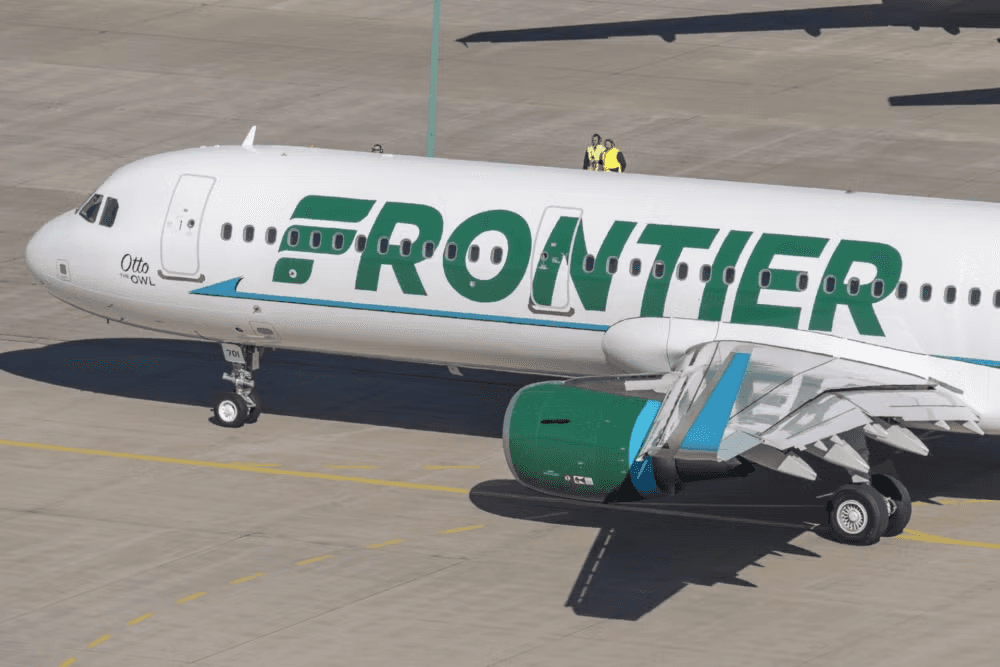
Frontier A321 Seat Guide (2026) | Cabin
TL;DR
Frontier A321 packs 195 passengers into a single economy cabin with a 3-3 aisle layout. Standard pitch is a tight 28", with the exception of exit row 17 at 31" pitch. Best seat: 17A or 17F (exit row window, extra legroom, no charge if you book it early). Worst seat: 40C (last row middle seat—no window, constant lavatory traffic, narrower due to fuselage taper). The surprising insight: rows 1–5 are unusually tight because they're over the forward cargo hold; rows 18–29 are your acoustic sweet spot, equidistant from engines and rear lavatories.
Frontier's A321 is a single-cabin, ultra-dense 195-seat budget aircraft with a 3-3 layout and a brutal 28" pitch throughout most of the cabin. Row 17 is an exit row with 31" of pitch, but avoid rows 30–40 in the rear—they're the tightest and noisiest zone on the bird. The real gotcha: Frontier charges for seat selection on most fares, so picking your row strategically before you're forced to pay is essential.
Quick specs
Cabin | Layout | Seats | Pitch | Width | IFE |
|---|---|---|---|---|---|
Economy | 3-3 | 195 | 28"–31" | 17" | None |
Economy Class
Frontier's A321 is all-economy, 3-3 layout (A/B/C left, D/E/F right) across 40 rows. Standard pitch is 28" everywhere except row 17, an over-wing exit row at 31". Rows 1–5 sit above the forward cargo hold and feel slightly more confined. Rows 18–29 are the acoustic sweet spot—equidistant from the engines (which sit aft of the wing) and the two rear lavatories at rows 38–39. Rows 30–40 are the tightest and noisiest zone; seats narrow as the fuselage tapers, and constant traffic from the lavatories ruins the experience. Rows 35–40 have no reclination or minimal recline. Middle seats (B/E) are aisles-less traps; avoid unless the flight is completely empty.
Best seats
Seat | Cabin | Why |
|---|---|---|
17A, 17F | Economy | Exit row window seats with 31" pitch—the most legroom on the aircraft. A sits on the wing strut for extra visual interest; F has a clear right-hand view. Slightly cold near the door, but worth it. |
18A, 18F | Economy | Rows immediately aft of the exit row, still enjoy quiet airflow from the exit. Standard 28" pitch, but you're surrounded by the quietest zone of the cabin (rows 18–29). |
24A, 24F | Economy | Dead center of the acoustic sweet spot. Furthest from engine noise and lavatory traffic. Standard pitch but the peaceful zone makes it feel more spacious. |
1A, 1C | Economy | Bulkhead row: 32" pitch with extra knee room and first-off deplaning. Drawback—no under-seat storage; bags must go overhead. Only seats A, C, and the middle D exist here due to galley configuration. |
Seats to avoid
Seat | Cabin | Why |
|---|---|---|
40A, 40C, 40F | Economy | Last row: seats are narrower due to fuselage taper, no windows, constant lavatory queue noise. Structural bracing creates cramped legroom. Pure misery on any flight over 2 hours. |
38B, 38E, 39B, 39E | Economy | Rows directly in front of the two rear lavatories. Nonstop foot traffic, odor bleed, and door slamming from 195 passengers sharing two tiny bathrooms. Even window seats here are torture. |
30–34 (B, E) | Economy | Rear-cabin middle seats: 28" pitch with no window or aisle access. You're wedged between two strangers for hours with zero escape. Don't pay to sit here. |
16B, 16E | Economy | Row 16 sits immediately ahead of exit row 17. Seat backs may be reclined-restricted or non-reclining to maintain evacuation clearance. |
💰 True Cost Breakdown
Frontier's seat selection on the A321 operates on a tiered pay-to-play system that often surprises first-time passengers. The airline does not include seat selection in any fare tier—even Basic or Classic fares require a paid add-on.
Standard Economy (Rows 20–40): $5–$12 USD per flight leg, depending on route demand and booking window. These are the seats directly behind the exit rows and toward the rear, where pitch drops to 28" and visibility shrinks. Frontier's algorithm charges more for these seats closer to departure, making early booking essential if you want to avoid surprises at check-in.
Exit Rows (Rows 18–19): $15–$25 USD. These overwing seats deliver 35" of pitch—a genuine 7" gain—and come with proper windows. For a 3–4 hour flight, this is measurably more comfortable than standard rows. Families should note that Frontier typically restricts exit rows to passengers 15+ years old and able-bodied, so verify eligibility before paying.
Front Rows (1–5): $18–$28 USD. Row 1 offers ~30–32" of bulkhead pitch with priority boarding and first-off deplane status, but sacrifices under-seat storage (carry-ons must go overhead on full flights). Rows 2–5 cost slightly less but deliver the same speed advantage without the storage penalty. The "Up Front" brand tier includes these rows plus Speedy Boarding.
Premium Extra Legroom (Row 29, occasionally rows with special layout): $25–$40 USD. Row 29 on the A321 has no seat directly in front on the A and F columns, creating exceptional legroom. However, there is no window at this row, and exit-row cold drafts are reported by passengers.
Comparison to legacy carriers: A round-trip transatlantic or cross-country flight on United, American, or Delta in Economy (including standard seat selection) typically costs $320–$480. That same route on Frontier with a Basic fare runs $180–$240, but adding exit-row seats (+$20–$30 per leg, so +$40–$60 round-trip) plus checked baggage ($35 round-trip) and carry-on overages pushes the real cost to $255–$335. Frontier wins on price but not on total value if you must buy ancillaries. For passengers under 5'10" flying under 2 hours, Frontier's basic price advantage often outweighs the discomfort; for taller passengers or longer flights, the exit-row upgrade becomes genuinely worth the fee.
📐 Space Reality
Frontier's A321 advertises 28–29" pitch in standard zones (rows 20–28 and parts of rows 2–17), with 35" in exit rows and 30–32" in the bulkhead. In practice, these numbers understate the tightness.
Pitch measurement: 28" is measured from the back of one seat to the back of the seat in front. For an average adult (5'8"–5'10"), this leaves approximately 8–10" of actual knee clearance once you account for seat depth and the pitch measurement method. On a 4-hour flight, most passengers in standard economy report leg numbness or the need to shift position every 30–45 minutes. At 35" (exit rows), you gain a full 7", which transforms the experience—your knees no longer touch the seat in front, and you can cross your legs or stretch.
Seat width: Frontier's A321 standard economy seats are 17.2" wide. This is 0.8" narrower than Southwest's 737–800 (17.8") and 1.1" narrower than United's 787 Dreamliner (18.3"). Slimline seats, which Frontier uses, feel narrower than their measurement because the armrests are often fixed or barely padded, and the cushion tapers at the edges. A person with a 16.5" shoulder width will experience contact with the armrests on both sides during extended flights.
Tray table and laptop fit: Frontier's A321 economy seats feature a standard tray table that folds down from the armrest. It measures approximately 15.5" wide and 8" deep when fully extended. A 13-inch MacBook Air (12.3" wide) will fit with 1–2" of clearance on either side, but only if you're in a window or aisle seat. Middle seats (B/E columns) have reduced tray-table clearance due to armrest positioning. Typing is possible but cramped; consider a lap desk for any serious work.
Comparison to a named competitor—Southwest 737–800: Southwest's standard pitch is also 28", but Southwest's seats are 0.6" wider and the cabin is narrower overall, making the psychological sensation of space greater. Southwest also does not charge for seat selection, and their rows are arranged 3–3 (138 seats) versus Frontier's 3–3 (194 seats on the A321), giving Southwest a structural advantage in comfort even at identical pitch. For the same dollar cost, Southwest Economy is the better product; Frontier's advantage is purely price.
⚡ Power & Connectivity
Frontier's A321 fleet does not include seat-back power (USB-A or AC outlets) as of 2024. Some newer aircraft in the Frontier fleet have USB-A at the seat, but most A321s in service do not. Passengers relying on in-seat charging must bring a power bank.
WiFi: Frontier offers WiFi via Viasat but does not include it in any fare tier. A single pass (one flight) costs $7 USD. Monthly passes ($70) and annual passes ($265) are available and are genuinely better value for frequent fliers, but the single-flight cost is steep for a 2–3 hour flight. Real-world speeds reported by passengers range from 1–4 Mbps download, sufficient for email and basic web browsing but not for video streaming or large file downloads. Connectivity drops over mountainous terrain and over water, a common issue on cross-country and southwest routes.
Power bank recommendation: For any Frontier A321 flight over 2 hours, bring a 10,000 mAh or larger power bank. A typical smartphone drains 15–20% per hour of moderate use (messaging, browsing, podcasts); a 2-hour flight without power will fully deplete most phones. On a 4-hour flight, you will definitely run out of battery without an external source. Seatback displays do not exist, so you cannot kill time watching movies on a screen in front of you—entertainment is phone/tablet dependent, making power management critical.
🏃 Boarding & Exit Strategy
Frontier uses a traditional boarding group system tied to fare and seat selection purchases:
Boarding groups (in order):
Group 1 (First): Elite frequent-flier members, paid-exit-row seat holders, and passengers with paid "Up Front" or premium seats (rows 1–5). Boards approximately 8–12 minutes before departure.
Group 2: Paid standard seat selections (rows 20–28 and non-elite rows 6–17), plus carry-on bag purchases for basic fare. Boards 4–6 minutes before departure.
Group 3: Basic Economy with no paid add-ons. Boards 0–2 minutes before departure. These passengers often end up gate-checking carry-ons if overhead bins are full.
Does Frontier A321 have lie-flat seats?
No. Frontier operates this A321 in all-economy configuration with 195 seats. No business, premium economy, or lie-flat products.
Best seat for sleeping on Frontier A321?
24A or 24F. You'll get standard 28" pitch (not lie-flat), but row 24 is centered in the acoustic sweet spot (rows 18–29), furthest from engine noise and lavatory chaos. Window seats let you lean against the fuselage. Rows 30–40 are noisier and tighter—avoid if sleep is the goal.
Does Frontier A321 have WiFi?
No WiFi, no seatback screens, no in-flight entertainment of any kind. Frontier is an ultra-low-cost carrier. Bring a book, podcast, or downloaded content.
Is Frontier A321 Economy acceptable for 4+ hour flights?
Barely. 28" pitch is below industry standard (most US carriers offer 31"–32" in economy). On flights over 4 hours—especially cross-country or Hawaii routes—the lack of legroom and IFE makes it a slog. The A321 is best suited for short-haul (1–3 hours). If you're flying 4+ hours on Frontier, pay for exit row 17 (31") or seriously consider a legacy carrier. The narrow seats (17") and zero recline in the rear (rows 35–40) are additional penalties for back-of-cabin bookings.
Can I select row 17 for free on Frontier?
Depends on your fare. Frontier's Basic fare (the cheapest) does not include seat selection; you'll pay $10–20 to reserve row 17 at booking. Standard and higher fares may include free seat selection. Always check before you book.
Which rows should I book for families?
Rows 18–29 are safest. They're away from the lavatories, quieter, and have good window/aisle access if you book seats at the ends. Avoid rows 1–5 (tight, above cargo) and 30–40 (noisiest, tightest). If traveling with children, row 24 or 25 with an A/F pair gives you a window, aisle, and peace and quiet.
frontier, a321, lcc, ultra-low-cost, seat guide, economy, best seats, exit row, seats to avoid, 28 inch pitch, 2026