Alaska Airlines
Boeing 737-800
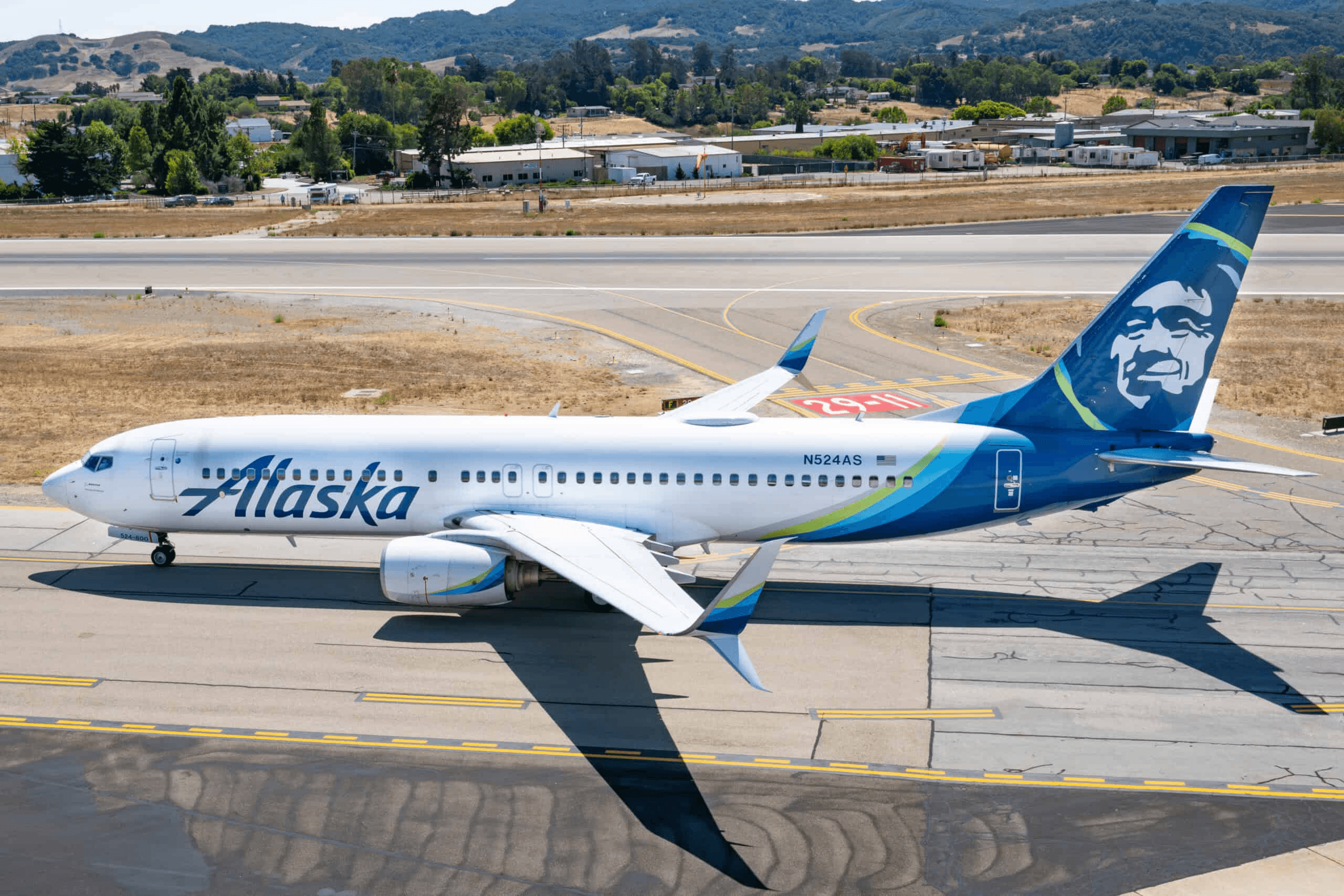
Alaska Airlines 737-800 Seat Guide (2026) | Cabin
TL;DR
Alaska's 737-800 carries 12-16 Premium Class seats in a 2-2 layout and 149-153 Main Cabin seats in a 3-3 layout. The aircraft is older than the MAX 9 fleet and shows it in IFE screen size and onboard power consistency. Best seats: Premium Class row 3 for quiet, Main Cabin exit row A or F for legroom. Worst seats: the restricted-recline row in front of the exit, and the very last row. The 737-800 is being progressively replaced by the MAX 9 on Alaska's routes - if the choice exists, the MAX 9 is the better aircraft.
Try Cabin
The 737-800 is the workhorse of Alaska's domestic fleet - a narrowbody you'll encounter on routes from Seattle, Portland, and Anchorage to the continental US and Hawaii. It's an older aircraft than the MAX 9, but the Premium Class product is the same, and knowing the specific rows to avoid saves you from the most common Alaska 737-800 pain points.
Alaska Airlines operates the Boeing 737-800 on domestic US routes and select transborder Canada and Mexico services from its Seattle, Portland, Los Angeles, and Anchorage hubs. The aircraft carries 162-168 passengers depending on configuration in two cabins: Premium Class at the front and Main Cabin behind.
Premium Class
Alaska Premium Class on the 737-800 is a 2-2 layout with 12-16 seats across 3-4 rows. Seat width is 20 inches and pitch is approximately 36 inches - a meaningful legroom upgrade over Main Cabin but not a lie-flat product. The seat reclines to a standard angle. The service includes complimentary food on qualifying routes, complimentary alcohol, and priority boarding. Row 1 deplanes fastest. Row 3 or 4 is typically the quietest Premium Class position - further from the forward galley noise that affects row 1 during drink service. The rearmost Premium Class row sits against the Main Cabin divider, which creates occasional foot traffic and light issues on full flights.
Main Cabin and Main Cabin Extra
Main Cabin on the 737-800 uses a 3-3 layout at 30-31 inches of pitch. The forward Main Cabin rows (directly behind Premium Class) are designated Main Cabin Extra on most configurations - these offer 34 inches of pitch for a modest fee and are worth it on flights over 3 hours for passengers who cannot access Premium Class. The exit rows provide the maximum legroom in Main Cabin. Row positions in front of the exit row do not recline - this is the single most important thing to check when selecting a Main Cabin seat on any Alaska 737-800. The last row has no recline and is adjacent to the rear galley and lavatories.
Power and IFE - the age caveat
The 737-800 fleet is older than the MAX 9 and the onboard technology reflects this. Power outlet availability varies by aircraft - some rows have USB-A and AC, others have neither. Alaska's IFE on the 737-800 uses a streaming-to-device system rather than seatback screens on most configurations - you use your own phone or tablet connected to the onboard Wi-Fi rather than the seatback screen approach on the MAX 9. Alaska provides complimentary streaming content via this system. If power access and seatback screens are important to you, specifically seek MAX 9 service on Alaska routes.
The 737-800 vs MAX 9 comparison
Alaska operates both the 737-800 (aircraft code 73H or 738) and the 737 MAX 9 (aircraft code 7M9) on overlapping routes. The MAX 9 advantages for passengers: larger overhead bins, LEAP-1B engines that are measurably quieter, consistent seatback IFE screens rather than streaming-to-device, and more consistent power outlet installation. The Premium Class product is effectively identical between the two aircraft types. For Main Cabin passengers on flights over 2 hours, the MAX 9 is the preferable aircraft when bookable at the same price.
Best seats
Seat | Cabin | Why |
|---|---|---|
Row 3 A or F | Premium Class | Mid-Premium window seats. Quiet, full recline, away from forward galley activity. |
Exit row A or F | Main Cabin | Best legroom in Main Cabin. Window position on full flights. |
Main Cabin Extra A or F (rows 8-12) | Main Cabin Extra | 34 inches of pitch at a modest fee. Worth it on flights over 3 hours. |
Seats to avoid
Seat | Cabin | Why |
|---|---|---|
Row in front of exit (no-recline) | Main Cabin | Restricted recline to keep the exit row access clear. Check seat map for specific row number. |
Last row A-F | Main Cabin | No recline, rear galley noise, lavatories directly adjacent. |
Last Premium Class row | Premium Class | Main Cabin divider foot traffic and light bleed on full flights. |
Does Alaska Airlines 737-800 have seatback screens?
Most 737-800 configurations use a streaming-to-device system rather than seatback screens - you stream Alaska's inflight entertainment to your own device over the onboard Wi-Fi. Some retrofitted 737-800s have seatback screens; check the specific aircraft when booking if this matters.
What is the aircraft code for Alaska Airlines 737-800?
The booking code is 73H or 738. Alaska's MAX 9 appears as 7M9. If you see 73H or 738 in your booking details, you are on the older 737-800.
Is Alaska Premium Class worth it on the 737-800?
On flights over 3 hours, yes - the 36-inch pitch, 20-inch width, complimentary food and drink, and priority boarding provide meaningful improvements. On shorter hops under 2 hours, the value calculation is less clear.
Does Alaska 737-800 have Wi-Fi?
Yes. Alaska Airlines provides satellite Wi-Fi and complimentary streaming entertainment on the 737-800 fleet through the inflight portal. Speed and reliability vary by route.
alaska airlines, 737-800, premium class, domestic, seat guide, pacific northwest