Air Canada
Boeing 787-9 Dreamliner
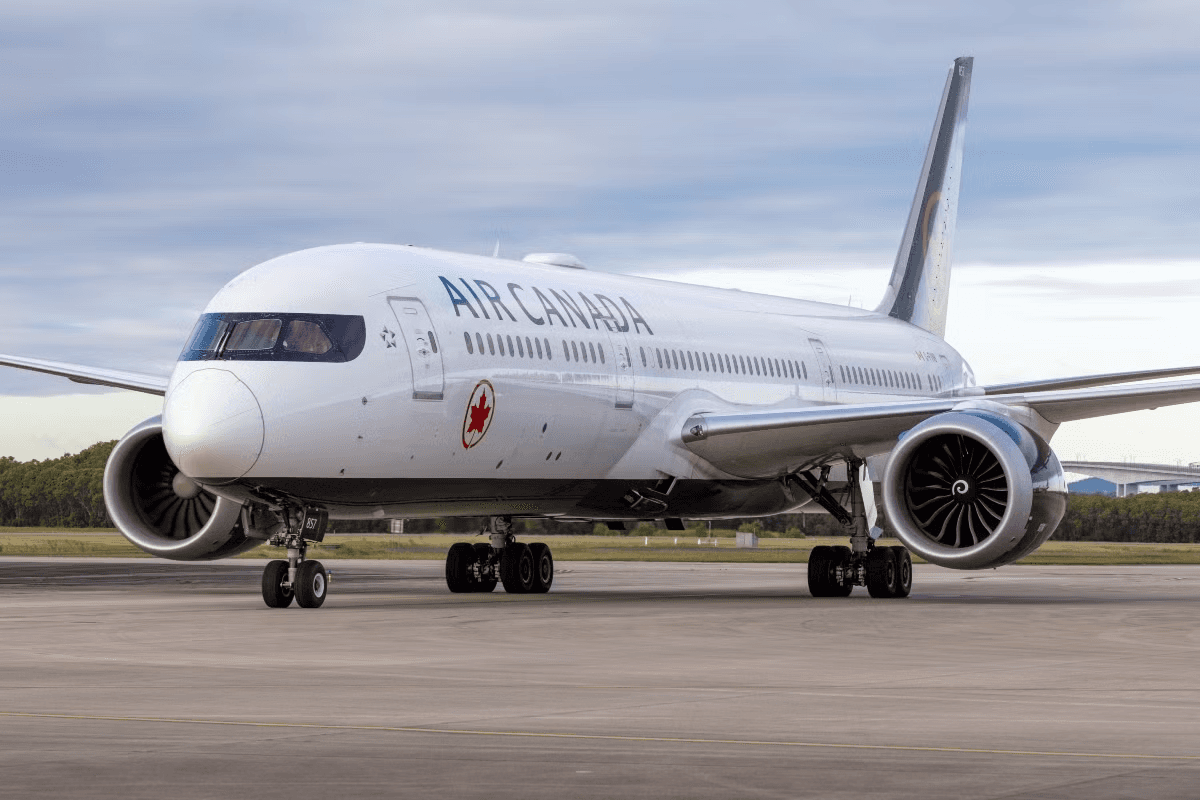
Air Canada 787-9 Seat Map & Intelligence Report | Cabin
TL;DR
The Air Canada 787-9 carries 298 passengers in three cabins: 30 Signature Class Business seats, 21 Premium Economy seats, and 247 Economy seats. The Signature Class product is a 1-2-1 reverse herringbone layout - every seat has direct aisle access and lies fully flat. The aircraft's Dreamliner advantages (6,000-foot cabin altitude, higher humidity, dimming windows) are meaningful on Air Canada's long transatlantic and transpacific routes.
Try Cabin
Air Canada's 787-9 is the cornerstone of its international fleet. The Signature Class product is competitive on transatlantic routes, but identifying the correct cabin configuration - and knowing which seats to avoid - separates a good flight from a genuinely restful one.
Air Canada operates the 787-9 as its primary long-haul international tool, connecting Toronto and Vancouver to Europe, Asia, and key Caribbean routes. The 787-9 is slightly narrower in fuselage than the 777 or A350, and Air Canada uses a 3-3-3 Economy layout to maximise revenue in the rear cabin. The result is a tight economy experience that is best navigated with careful seat selection.
The intelligence most relevant for 2026 is the Signature Class configuration. Air Canada uses a reverse herringbone seat in a 1-2-1 layout. Unlike United's Polaris or Qatar's QSuite, there are no privacy doors - the product is genuinely good but open. Odd-numbered window seats sit closer to the fuselage and benefit from the console acting as a partial screen from the aisle. Even-numbered window seats face the aisle more directly.
Signature Class Intelligence
The cabin is split into two sections on most 787-9 configurations. The forward section (rows 1–7) is the premium choice - fewer passengers, faster service, and easier access to Door L1 for priority deplaning. Row 1 offers wider footwells because there is no seat structure ahead of you. The rear Signature section (rows 9–15) is adjacent to the Premium Economy galley, which means more ambient noise and light during the meal service window.
💻 Digital Nomad Workspace Audit
Signature Class features a bi-fold tray table that accommodates a 16-inch laptop. The surface is stable but narrower than what you find on the A350 or 777. Air Canada uses Viasat satellite WiFi, which delivers streaming-capable speeds on most routes. Signature Class seats have an international AC outlet and USB-A. Premium Economy adds USB-C on newer aircraft. Economy provides USB-A only, with a shared AC outlet per seat pair.
🔊 Acoustic & Sensory Audit
The 787's GEnx engines and composite fuselage make this one of the quieter long-haul aircraft. Cabin pressure at 6,000 feet and higher humidity than older widebodies make a genuine difference on the Toronto–Tokyo or Vancouver–Sydney runs. The quietest Economy zone is rows 35–42 - forward enough to be clear of engine drone, far enough from the rear galley that crew activity during descent doesn't disturb the last two hours of sleep.
🚪 Deplaning Intelligence
Air Canada typically uses Door L1 for Signature Class and L2 for Economy at Toronto Pearson. On flights arriving into Europe, the priority often shifts and L2 becomes the primary exit for economy - in which case rows 28–32 get off before the front of the plane. If your connection is tight at Heathrow or Amsterdam, check Air Canada's deplaning pattern for your specific arrival airport.
Best Seats
Seat | Cabin | Why |
|---|---|---|
1A & 1L | Signature Class | Bulkhead. Wider footwells for side-sleepers and zero foot traffic passing your seat. |
Odd-numbered A & L seats (3A, 5A, 7A) | Signature Class | True window seats with console privacy shield. The best sleeping positions in Business. |
Row 20 A & K | Premium Economy | Bulkhead row with maximum legroom and no seat reclining in front of you. |
Row 35 A & K | Economy | Exit row with near-unlimited legroom. Quietest rear-cabin zone. |
Seats to Avoid
Seat | Cabin | Why |
|---|---|---|
Last row of Signature Class | Signature Class | Direct galley adjacency. Noise and light during Premium Economy meal prep. |
Premium Economy last row | Premium Economy | Restricted recline, Economy curtain bleed. |
Economy rows 55–57 | Economy | Last rows. No recline, rear galley noise, fuselage narrows here. |
Does the Air Canada 787-9 Signature Class have a door?
No. The reverse herringbone Signature Class seat does not have a privacy door. It is an open-suite design. The console provides partial visual privacy from the aisle, but it is not enclosed.
Is Air Canada 787-9 Premium Economy worth it?
On routes over 8 hours - particularly Toronto to Tokyo or Vancouver to London - yes. The 2-3-2 Premium Economy layout places window pairs in a two-seat section with no middle neighbour. Pitch is 38 inches. The value case is strong relative to the price gap with Signature Class.
Does Air Canada 787-9 Economy have power?
USB-A at each seat. Shared AC outlet per pair on most configurations. Newer deliveries add USB-C to Economy rows, but this varies by aircraft - check your specific seat map.
How do I tell which Air Canada 787-9 configuration I'm on?
All Air Canada 787-9s use the same Signature Class layout. The differences between individual aircraft are mainly in Economy power and entertainment system generation. Use the booking seat map - if Economy shows rows up to 57, it is the standard long-haul configuration.
air canada, 787-9, air canada business class, signature class, dreamliner, seat guide